Getting around · The practical guide
Driving in Cyprus: what UK visitors need to know before hiring a car
Driving in Cyprus is familiar for UK visitors because traffic keeps left, but car hire, speed limits, mountain roads and the Green Line need a little advance thought.
- Filed under
- Plan your trip
- Updated
- 14 July 2026
- By
- The editors
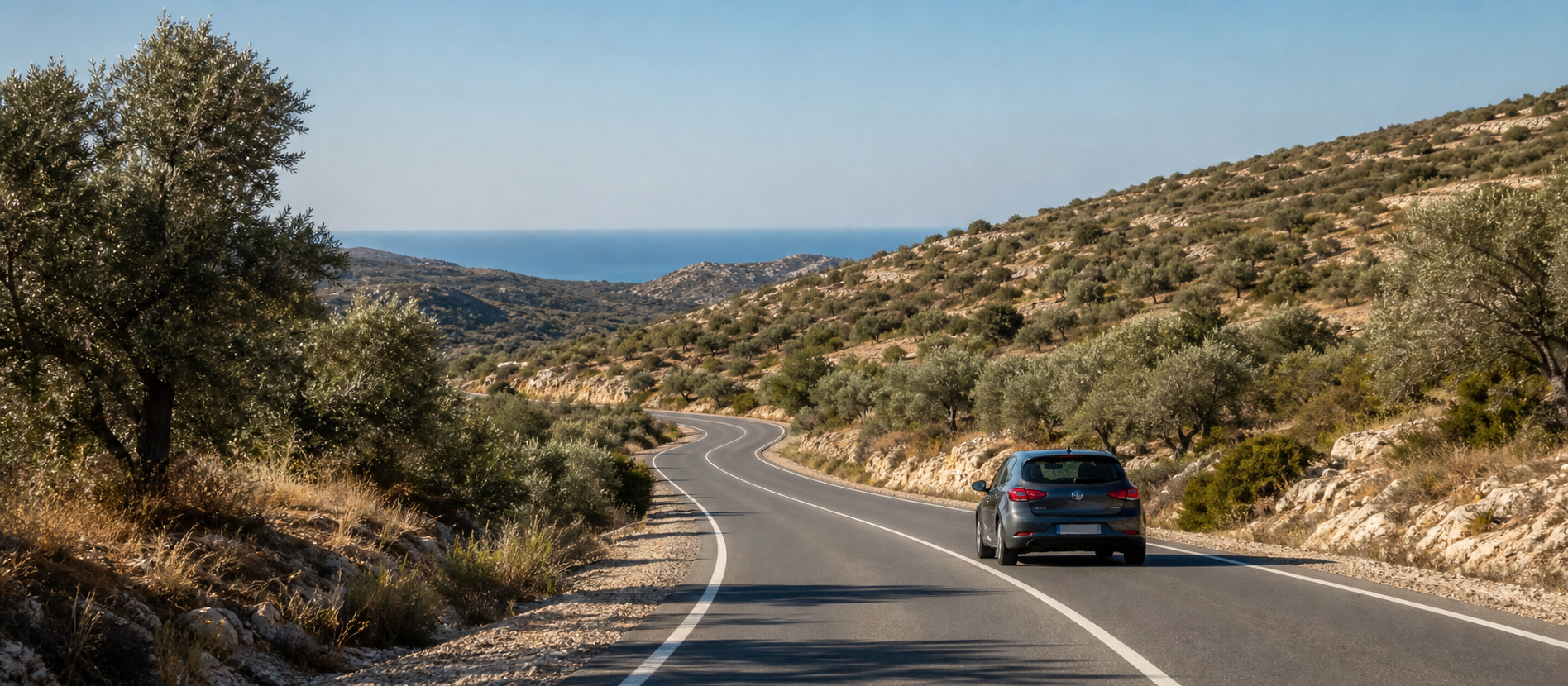
Driving in Cyprus is usually straightforward for a UK visitor: traffic keeps left, the steering wheel is on the right and a UK photocard licence is accepted. The part worth planning is not which side of the road to use. It is choosing whether a car genuinely improves your trip, reading the hire agreement before you pay, and treating rural and cross-Green-Line driving as separate decisions. If you are still comparing cars and rental terms, start with our Cyprus car-hire checklist before returning here for the road rules.
For a one-base beach break, you may not need a car at all. For a week that includes the Troodos villages, a few quieter beaches or the western coast, it can turn the island from a transfer timetable into your own itinerary. Start with the Cyprus holiday guide if you are still choosing a base; this is the page to read once you know a car is likely.
The quick answer: what changes for UK drivers?
| Question | Practical answer |
|---|---|
| Which side do you drive on? | Left. Overtake on the right. |
| Are speed limits in miles? | No — road signs use km/h. |
| Can a visitor use a UK photocard licence? | Yes, according to GOV.UK’s current Cyprus advice. |
| Is a car essential? | No for a resort-based break; useful for villages, coves and independent day trips. |
| Can a Republic-hired car cross the Green Line? | Only if the rental agreement and insurance allow it. Do not assume cover. |
| What number should I save? | 112 for emergency services. |
The familiar driving side removes the biggest adjustment. The remaining risks are the ordinary ones: fatigue after a flight, unfamiliar junctions, heat, distraction and making a late decision about a route your hire car is not permitted to take.
Decide whether a car earns its place
A car is most useful when it changes the kind of holiday you can have, not merely because it looks inexpensive in a search result. The final hire cost may include an excess, fuel policy, additional driver, child seat, airport collection charge and insurance choices. Compare that final figure with the journeys you actually plan to make.
| Your trip | Car verdict | Why |
|---|---|---|
| One hotel in Paphos, Larnaca, Protaras or Ayia Napa | Usually optional | Airport transfers, walking and a single organised day out can be simpler. |
| A family week with beaches plus water park | Useful, not automatic | It can make the days flexible, but parking, seats and driver fatigue count too. |
| Paphos plus Akamas, villages and inland stops | Often worthwhile | The useful places are spread out and do not fit a neat bus timetable. |
| Limassol with wine villages or Troodos plans | Useful | It opens up the inland, though no one who has been tasting should drive. |
| A north-of-Cyprus itinerary | A separate insurance decision | Check crossing and hire-car cover before building the route around it. |
For the east-coast beach towns, a car can be more burden than freedom if the plan is hotel, beach and restaurants. For an independent Paphos week, it is more compelling: Coral Bay, the villages and parts of the western coast are much easier on your own timetable. If you are weighing a one-base holiday against hiring, our Cyprus public transport guide explains what local buses, intercity routes and airport services can realistically cover. Our Cyprus holiday budget guide explains why the headline rental rate is rarely the number to compare. If you are considering arriving with your own vehicle from Greece, read the Cyprus ferry guide before assuming a vehicle booking or insurance is straightforward.
Licence, documents and the handover
Bring your physical, valid driving licence and make sure the name on the booking matches the driver. GOV.UK says that a UK photocard driving licence can be used in Cyprus. If you still have a paper licence, it says you may need to update it to a photocard or obtain the appropriate International Driving Permit; settle that before your flight rather than at the rental desk.
At collection, slow down. Photograph the vehicle from every side, note existing damage on the form and ask what to do after a breakdown or collision. Check the fuel policy, excess, windscreen and tyre cover, permitted roads, additional-driver conditions and whether the vehicle is allowed outside the Republic-controlled area. Do not leave your passport as a rental deposit: GOV.UK notes that this is illegal.
The same advice applies to scooters, quads and buggies, with an extra warning: the Foreign Office says hire companies commonly provide only third-party cover for mopeds and quad bikes. If you want one, read the insurance and safety terms more carefully than you would for a small car.
Rules worth knowing before the first junction
Cyprus uses metric signs. The Road Transport Department’s English visitor guidance sets the usual limits at 100 km/h on major highways (with a 65 km/h minimum), 80 km/h on ordinary inter-urban and rural roads, and 50 km/h in built-up areas, unless a sign says otherwise. Those are reference points, not a reason to ignore a lower signed limit, a sharp bend or poor visibility.
The same official guidance says seat belts are compulsory in the front and rear, hand-held mobile-phone use is prohibited, and children under 1.5 metres need a suitable belt or restraint system. It gives an alcohol limit of 50 mg per 100 ml of blood (and 22 micrograms per 100 ml of breath). The sensible holiday rule is simpler: if you are driving, do not drink.
In an emergency, call 112. The official Road Transport Department visitor leaflet is a useful pre-trip check for the current rules and the exact limit wording.
The moments that catch visitors out
Most driving mistakes happen when your attention is divided, not because the road network is mysterious. Give yourself the first hour after collection to get settled: adjust mirrors, learn the indicators and wipers, set navigation before moving and take the first roundabout slowly.
- Metric speed signs. Your car may show both units, but make sure you know which scale you are reading before a motorway or village section.
- Place names that change spelling. Official signs romanise Greek names differently from your booking, so Limassol appears as Lemesos and Paphos as Pafos. Our guide to the languages spoken in Cyprus explains why, and lists both spellings for every major town.
- Roundabouts and turning. Keep the left-side habit front of mind, particularly when pulling out of a quiet car park or petrol station.
- Heat and glare. Carry water, use sunglasses and leave more time than a map suggests for a hot afternoon.
- Rural routes after dark. Make the first mountain or village drive in daylight where possible. A scenic road can be narrow and bendy even when the distance looks short.
- Phones and photos. Pull over lawfully and safely; do not hold a phone while driving, including for directions or a photograph.
The Foreign Office says driving standards are poor and that the risk of road deaths is higher than in the UK. That is a reason to leave space, slow down and keep the day’s route modest — not to write off an otherwise manageable road trip.
Akamas, beaches and unsealed roads
The mistake is treating every line on a map as an ordinary hire-car route. A standard rental can be the right tool for a beach, village lunch or coastal viewpoint, but a rough track may be excluded by the agreement even if the vehicle can physically proceed.
For the Akamas, choose the experience first. A boat from Latchi avoids the question altogether; an authorised guided trip moves the driving responsibility to the operator; and a self-drive route only makes sense when the vehicle, insurance and road conditions all agree. Read our Akamas Peninsula guide before setting out — it explains the distinction between a proper 4x4 day and the routes that are better seen from the water.
Do not use a car-hire blog or a social post as permission to take a vehicle off surfaced roads. The rental contract is the document that matters. If its wording is unclear, ask the company in writing and keep the reply.
The Green Line and northern Cyprus: check before you drive
Crossing the Green Line is not a casual extension of a Republic-based road trip. GOV.UK says cars hired in the Republic of Cyprus often have no insurance cover in the north and that you will not be allowed through a crossing without the correct insurance documents. It also says that it may be possible to buy insurance at some crossings.
That does not mean every hire company permits every crossing or every route. Before you collect the car, ask whether northbound travel is permitted, what insurance is required, whether roadside assistance continues there and what documents you need at the crossing. Then check the current FCDO regional advice as well. If any answer is vague, change the plan rather than testing it at the barrier.
A calm first day behind the wheel
- Collect the car in daylight if you can, inspect it and photograph it.
- Drive a short, familiar route to the hotel before attempting a mountain road or cross-island day.
- Keep the next morning local: a beach, supermarket or easy city stop is enough to learn the car and parking rhythm.
- Plan one substantial drive for another day, with a paper or offline backup to navigation and water in the car.
- Return before tiredness turns a good day into the hardest part of the holiday.
Driving gives Cyprus its best kind of flexibility: a second swim at a bay you liked, a village lunch that runs long, the freedom to skip a crowded stop. The useful rule is not “hire a car”. It is “hire a car for the trips it genuinely improves, then drive as if the unplanned turn is part of the holiday”.
Quick answers
Frequently asked questions
Is driving in Cyprus the same as in the UK?
The key orientation is familiar: traffic keeps left and you overtake on the right. The practical differences are metric speed limits, local road conditions and the need to check hire-car insurance carefully, especially if you may cross the Green Line.
Can I drive in Cyprus with a UK driving licence?
Visitors can use a UK photocard driving licence in Cyprus. GOV.UK says paper-licence holders may need to update to a photocard licence or obtain the appropriate International Driving Permit, so check before travel.
Do I need a car for a Cyprus holiday?
No for a one-base resort break in Paphos, Larnaca, Ayia Napa or Protaras. It is useful for mountain villages, quieter beaches and an independent west-coast itinerary; compare the final hire cost with the taxis and tours you would otherwise use.
Can I take a hire car to northern Cyprus?
Do not assume that you can. Cars hired in the Republic often have no insurance cover in the north; check your agreement and insurance documents before travelling to a crossing point.
What are the standard speed limits in Cyprus?
Unless signs state otherwise, the Cyprus Road Transport Department’s visitor guidance gives 100 km/h on major highways, 80 km/h on ordinary inter-urban and rural roads, and 50 km/h in built-up areas. Always follow the posted limit.