Sea days · Wrecks, reefs and first-dive planning
Scuba diving in Cyprus: choose the right coast, not just a dive centre
Thinking about scuba diving in Cyprus? Compare Larnaca’s Zenobia wreck, the Protaras coast, Ayia Napa’s underwater museum and Paphos before you book.
- Filed under
- Plan your trip
- Updated
- 25 August 2026
- By
- The editors
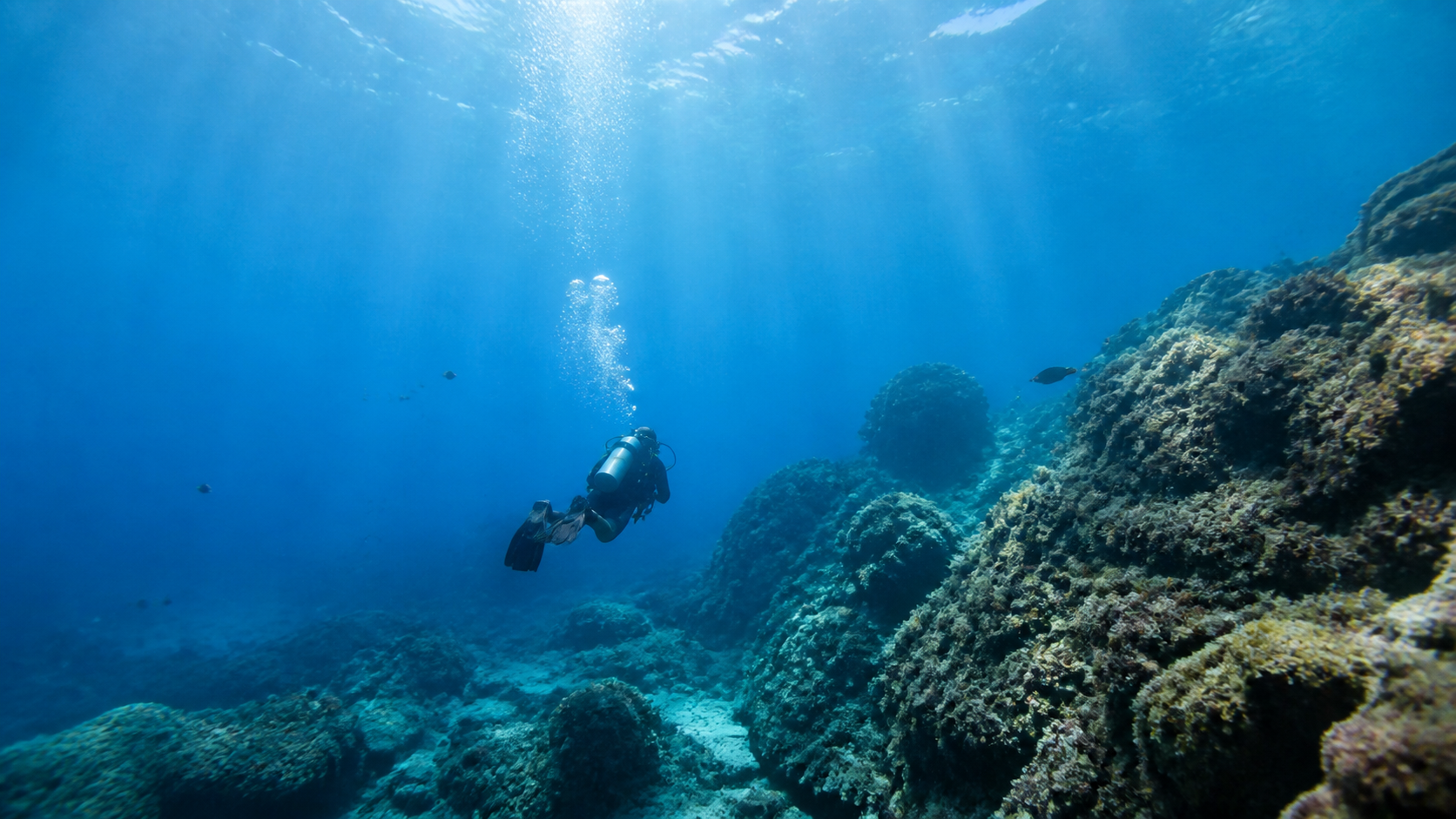
Cyprus is a strong scuba-diving choice when you pick the coast for the kind of underwater day you actually want: Larnaca for the Zenobia wreck, the Protaras–Ayia Napa side for reefs, wrecks and the underwater museum, or Paphos for a west-coast holiday where diving is one part of the week. Do that first. Choosing a dive centre before choosing the right coast is how a promising sea day becomes a long transfer or a mismatch in experience.
The island is not one uniform dive destination. The current Department of Fisheries and Marine Research overview of marine protected areas documents artificial reefs and protected sites from Protaras and Ayia Napa to Geroskipou and Larnaca. That means the useful question is not simply “is there diving in Cyprus?” but “what site is appropriate for me on the day?” Conditions, qualifications and operator plans matter more than a fixed online list.
Choose the coast before you book
| Base | Best fit | Why it is distinct | Keep in mind |
|---|---|---|---|
| Larnaca | Wreck-focused divers | The Zenobia is the island’s signature wreck draw | A wreck is not a single experience; your route must suit your training and the day’s plan |
| Protaras | Divers pairing coastal holiday time with east-coast sites | Paralimni’s protected area includes the Liberty and Nemesis III artificial-reef vessels | It is better for a considered diving day than a promise of one particular site |
| Ayia Napa | A shallower cultural-and-reef experience | The Ayia Napa protected area includes MUSAN, an underwater sculpture museum | A sculpture site does not remove the need for a proper briefing and conditions check |
| Paphos | Holidaymakers who want diving alongside archaeology, beaches and the Akamas | Geroskipou’s protected artificial reef gives the west coast a diving angle | Do not book a Paphos base expecting the Zenobia to be next door |
This is a planning guide, not a site-by-site permission slip. Let a properly qualified, insured local operator decide whether a particular dive suits your certification, recent experience, medical declaration and the conditions. The best itinerary leaves room to make that sensible call.
Larnaca: choose it when the Zenobia is the point
The Zenobia wreck is the obvious reason divers choose Larnaca. Visit Cyprus’s official site page classifies it as a wreck dive, while the fisheries department lists an MPA around the Zenobia wreck in its wider marine-protected-area network. That combination tells you what matters: it is an important, managed site, not a self-guided swim stop.
For a certified diver, the useful booking conversation is about the exact planned route, depth range, experience requirements, boat logistics and whether the operator considers the conditions right. For a beginner, it is better to separate the dream of seeing a famous wreck from the reality of a first supervised dive. A good first underwater experience may be somewhere shallower and simpler.
Larnaca also makes a practical holiday base because the dive day can sit beside a city break. Our Larnaca guide helps with the broader base decision, while the Larnaca airport-to-Protaras guide is useful if you are flying in and then staying on the east coast. Avoid squeezing a dive in between landing and an ambitious road journey: clear communication and a calm schedule are more valuable than one extra activity.
Protaras and Ayia Napa: reefs, artificial structures and a different kind of day
The south-east coast gives you a different frame. In the Paralimni MPA, on the Protaras coast, the Department of Fisheries and Marine Research identifies natural rocky substrate, seagrass meadows and artificial reef structures, including the Liberty and Nemesis III vessels. The area is protected from all forms of fishing. That is an ecological and regulatory context, not a guarantee that every structure will be available to every diver.
Ayia Napa has the most visually unusual option. The department says the Ayia Napa MPA contains MUSAN (the Museum of Underwater Sculpture Ayia Napa): 93 sculptures and statues deployed at depths of 8.5 to 10.5 metres, designed to function as artificial reefs as well as an underwater cultural attraction. It can make a compelling addition to an east-coast trip, particularly for people interested in the meeting point of art and marine habitat. Ask an operator whether it fits your level and whether the day’s visibility, entry and sea conditions make it the right choice.
Keep the rest of the day close to the water. Cape Greco and the Protaras beaches guide are natural surface-world companions, but do not turn them into a hard timetable around a dive. Diving has its own briefing, equipment, recovery and weather decisions. A coastal walk or an easy meal afterwards is more realistic than promising yourself a packed sightseeing loop.
Paphos: make diving part of a west-coast week
Paphos works best for travellers who want a broad Cyprus holiday and would like to dive during it, rather than those whose whole trip is built around a single signature wreck. The fisheries department describes Geroskipou MPA as the largest site in its artificial-reef network and identifies the LABOE vessel among its features. It gives the Paphos area a legitimate underwater dimension without pretending that every holidaymaker should choose a deep or wreck-led itinerary.
The sensible version of a Paphos diving day is deliberately uncluttered: agree the site with the operator, preserve time for the briefing and return, then use the rest of the week for the places that make the west coast distinct. Paphos, the Akamas Peninsula and Kourion are better distributed over several days than bolted onto one dive day.
Beginner, newly certified or experienced: ask different questions
Your level should shape the choice more than a photo of a wreck or a viral reel. Before you pay a deposit, ask the operator these plain questions:
- What is the exact site plan for my experience level? “Zenobia”, “MUSAN” or “Protaras” is not enough detail on its own.
- What qualifications, recent-dive experience and paperwork are required? Be candid rather than hoping a centre will bend a rule on the day.
- What happens if weather, visibility or sea state changes? A clear alternative or cancellation policy is a sign of a well-run plan.
- What is included? Clarify equipment, transport, guides, insurance expectations and any course materials before comparing prices.
- What should I bring and when should I arrive? Small operational details matter when you are travelling without your own kit.
Do not use an online article to self-certify for a depth, wreck route or overnight activity. Cyprus regulates night scuba diving: the fisheries department says activity from one hour before sunset until one hour after sunrise requires prior approval. If night diving is part of your plan, ask the operator how it handles that process rather than assuming an ordinary daytime booking covers it.
Dive with the protected coast in mind
The most useful environmental rule is also the simplest: treat the reef as a living place, not a prop. The department asks MPA visitors to avoid disturbing the seabed and marine life and to avoid anchoring on Posidonia meadows where boat transit is allowed. It also says all forms of fishing are prohibited within the six MPAs with artificial reefs. Listen carefully to the site briefing, keep your buoyancy controlled and do not touch, feed, collect or reposition anything for a photograph.
That approach improves the experience as well as reducing impact. Cyprus’s underwater appeal is usually the composition of a dive—rock, reef, a wreck or artwork, small marine life and clear light—not a chase for a particular animal or a souvenir photograph. If an operator changes the site for safety or conservation reasons, that is good judgement, not a ruined day.
A calm way to build the week
For one or two dives, choose a base that suits the rest of your holiday and keep the diving day low-pressure. Larnaca is the cleanest choice if the Zenobia is central; Protaras or Ayia Napa makes more sense for an east-coast beach break; Paphos is the balanced west-coast option. If diving is the trip’s main purpose, give yourself enough days to adapt to sea conditions instead of buying flights around one non-refundable site.
Cyprus rewards that restraint. Pick the coast, be honest about your experience, let a qualified operator make the final site call and leave the protected seabed as you found it. You will get a better dive and a better holiday out of it.
Sources for current site and regulation information: Department of Fisheries and Marine Research: Marine Protected Areas with Artificial Reefs, Department of Fisheries and Marine Research: Marine Protected Areas Network and Visit Cyprus: MS Zenobia shipwreck. Check operator, weather, certification and access details directly before booking.
Quick answers
Frequently asked questions
Is Cyprus good for scuba diving?
It can be an excellent choice if you want a Mediterranean diving holiday built around wrecks, reefs, caves and clear coastal water rather than a destination chosen only for large-animal encounters. Choose the coast around the kind of dive and experience level you want, then let a qualified local operator assess the day’s conditions.
Where is the Zenobia wreck?
The Zenobia is off Larnaca. It is a major wreck-diving draw, but the appropriate route and depth depend on training, experience and the operator’s assessment. It is best treated as a reason to base yourself in or near Larnaca, not as a promise that every visitor can dive the wreck in the same way.
Can beginners scuba dive in Cyprus?
Many centres offer supervised introductory experiences, but a first dive is not interchangeable with a certified dive. Tell the centre honestly about your swimming comfort, medical considerations and previous experience, and follow its briefing and suitability decision.
Do I need to book diving in Cyprus in advance?
For a particular wreck, course, small group or a short holiday window, booking ahead is sensible. Confirm the exact site, qualification requirements, included equipment, cancellation terms and weather plan directly with the operator rather than relying on a generic itinerary.