Ancient Cyprus · Theatre, mosaics and a coastal headland
Kourion, Cyprus: how to visit the ancient city without rushing it
Planning Kourion in Cyprus? See what is at the archaeological site, how to structure a half-day, current official entry details and how it fits a Limassol or Paphos trip.
- Filed under
- Places
- Updated
- 18 August 2026
- By
- The editors
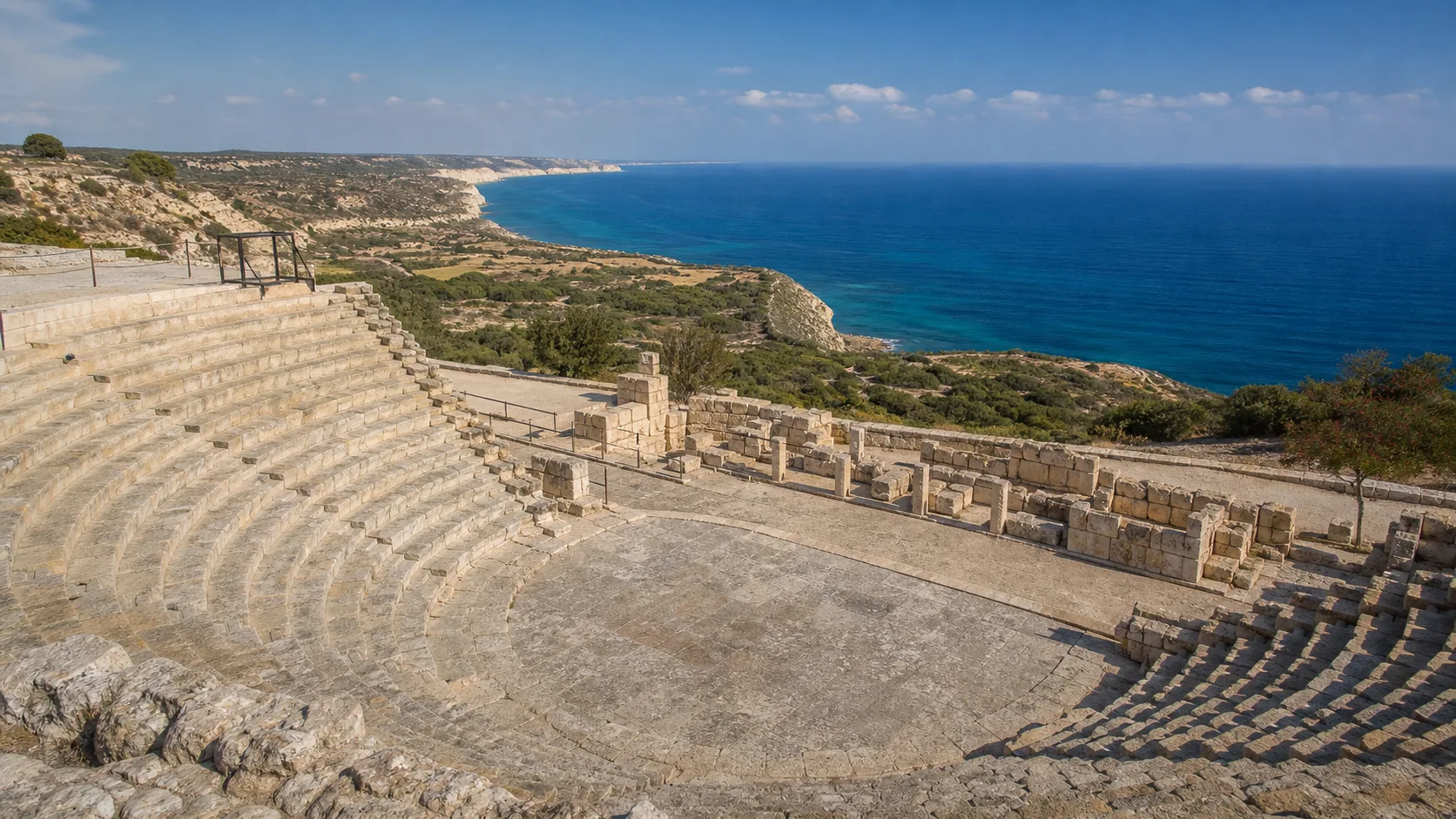
Kourion is worth a half-day if you want more than a theatre photograph: its real strength is the combination of the sea-facing theatre, mosaics, baths, agora and the scale of an ancient city on one headland. Start with the theatre, follow the site rather than a rigid tick-list, and leave enough time to look at the mosaics and the landscape that made this position important.
Kourion sits in the Limassol district, on the road corridor towards Paphos. The Cyprus Department of Antiquities’ site record places the acropolis about four kilometres south-west of Episkopi; Visit Cyprus describes it as one of the island’s major ancient city-kingdoms. This is an outdoor archaeological site, not an indoor museum with a single must-see room. That is why a small amount of planning makes the visit much better.
Kourion at a glance
| Choose Kourion for… | Think twice if you need… |
|---|---|
| A substantial archaeological site with a dramatic coastal setting | A quick, air-conditioned attraction between fixed appointments |
| Theatre, Roman-period buildings and mosaics in one visit | A guaranteed performance or access to every area on a particular day |
| A cultural half-day from a Limassol or Paphos base | A car-free stop with no transport plan |
| A slower alternative to beach-only days | A tightly scheduled, midday-heavy sightseeing day in hot weather |
The answer to “is it worth it?” depends on what you want from Cyprus. If your trip is only about a resort pool or you have a very short list of beach days, do not turn Kourion into an obligation. If you want the island’s long history to feel connected to the coastline you are travelling through, it is one of the clearest places to do that. For the wider base decision, see our Limassol guide and Paphos guide. If you are staying in Paphos and weighing which archaeological site to prioritise, our Tombs of the Kings guide covers the closer, cheaper and much shorter alternative, and the Paphos Archaeological Park guide covers the mosaics on your doorstep. If you have only a short city break, our Limassol weekend itinerary shows why Kourion is the one substantial second-day choice rather than an extra rushed stop. The natural companion stop on the same road is Kolossi Castle, a €2.50 medieval keep that takes about an hour and works best visited before Kourion rather than after it. Kourion Beach sits directly below the site, and our Limassol beaches guide covers how it compares with the city beaches before you build the day around a swim.
What to see: follow the city, not just the theatre
The Greco-Roman theatre is the obvious starting point. The Department of Antiquities says it was originally built in the 2nd century BC, with the surviving form reflecting Roman-period additions and restorations. It is still used for cultural events, but do not assume an event is taking place during your visit; check the organiser’s live information separately.
Then continue to the House of Eustolios and its baths. The Department dates this complex to the late 4th to early 5th century AD and identifies it as the residence of a wealthy inhabitant, arranged around courtyards with a bath establishment. It is the part of Kourion that changes the site from a spectacular theatre into a city with domestic life, bathing and decoration behind it.
The Roman agora is another essential stop. Its present form is early 3rd century AD with later Early Christian additions, according to the Department. Notice the city-scale layout rather than rushing past in search of a single viewpoint. The official site record also identifies the House of the Gladiators, an early Christian basilica and the stadium, the latter around a kilometre west of the main site. They are useful context, but do not promise yourself every element before you have assessed the heat, access and the time you actually have.
A simple half-day plan
The most satisfying visit is deliberately modest:
- Arrive early enough to start with the theatre and take in the setting before the middle of the day.
- Move through the House of Eustolios, mosaics and baths at a slower pace than the first viewpoint suggests.
- Continue to the agora and other accessible remains, using the information at the site to decide what deserves more time.
- Leave a margin for water, shade and the return journey rather than adding a distant stop merely because it looks close on a map.
That order gives the theatrical view its place without letting it consume the visit. It also leaves you free to adapt if conservation work, an event or the conditions limit access to part of the site. The Department has previously announced both full closures and restricted access for conservation, so the official page is more useful than an old itinerary when you are close to travel.
Tickets and opening hours: check the official page before setting off
For planning purposes, the Department of Antiquities currently lists Kourion as open daily from 08:30–19:30 between 16 April and 15 September (last ticket 19:00), and 08:30–17:00 between 16 September and 15 April (last ticket 16:30). It lists standard admission at €4.50, and says that opening hours, fees and public-holiday arrangements can change. Use its current Kourion information on the day you plan to go; this article is a planning guide, not a substitute for a live notice.
The same official source describes most of the site as wheelchair accessible, with a special entrance for the western part that guards can open, marked parking and accessible toilets. Accessibility needs vary, so contact the site directly if a particular route, surface or facility matters to your visit.
Getting there: make the transport decision first
Kourion works most naturally as a self-drive, taxi or organised-tour stop. It is on a cross-island road corridor, but that does not make it an effortless add-on to any hotel day. A car gives the most flexibility once you leave the main towns, while a taxi or tour may be more relaxing if nobody wants to navigate or deal with parking in heat.
If you are hiring, choose the vehicle for the whole holiday rather than only this one stop; our Cyprus car-hire guide explains the booking and agreement checks worth making. If you are driving yourself, the relevant question is not whether Kourion is ambitious, but whether the rest of the day remains sensible. Read our Cyprus driving guide before making several archaeological sites, villages and beaches into one rushed loop.
For a no-car trip, do not rely on a generic map result that says “bus” without checking the service, stop and return journey. Kourion is a good cultural stop only when you can get back comfortably. Our public transport in Cyprus guide is a useful starting point for deciding whether a car-free plan is realistic for your base.
When should you go?
Start early or visit later in the day when the forecast is hot, but let the official closing time determine the plan. The site is exposed and largely outdoors, so take water, sun protection and shoes that work on uneven historic ground. In cooler weather, the same advice still matters: rain, wind and a slick surface can change how much of a large open site feels comfortable.
Autumn can be a particularly good time to combine an archaeological visit with a broader Limassol or west-coast break, provided you check the seasonal hours after 15 September. If you are still choosing dates rather than making a day plan, our Cyprus holiday guide compares the months and the trade-offs between heat, sea temperature and sightseeing.
The verdict
Visit Kourion for the whole ancient city, not only its famous theatre. Give it a real half-day, verify the official hours and access arrangements, and make the onward travel easy. That approach leaves room for the theatre’s view, the mosaics and the history to do their work—without turning an important archaeological site into a rushed photo stop.
Quick answers
Frequently asked questions
Is Kourion worth visiting?
Yes, if you want one well-preserved archaeological site with a theatre, mosaics, public buildings and a sea-facing setting. It is a better fit for a deliberate half-day than a hurried photo stop between several unrelated attractions.
How long do you need at Kourion?
Allow a relaxed half-day around the site. That gives you time to see the theatre, House of Eustolios, agora and views without treating the site as a checklist. Add time only if you have independently confirmed another nearby stop or an event.
What are Kourion's opening hours and ticket price?
The Department of Antiquities currently lists daily 08:30–19:30 from 16 April to 15 September and 08:30–17:00 from 16 September to 15 April, with a €4.50 admission fee. These details can change, so check the official site page before travelling.
Can Kourion be visited from Limassol or Paphos?
Yes. Kourion lies on the Limassol–Paphos road corridor, so it can fit either base. It is simplest by car, taxi or a tour; make the transport choice before treating it as a fixed timetable stop.