Limassol district · A one-hour castle that works as half of a better day
Kolossi Castle: what it costs, how long it takes and why to pair it with Kourion
Kolossi Castle costs €2.50 and takes about an hour. See the official hours, the 16 September winter switch, and whether the Department of Antiquities day card is worth buying.
- Filed under
- Places
- Updated
- 3 September 2026
- By
- The editors
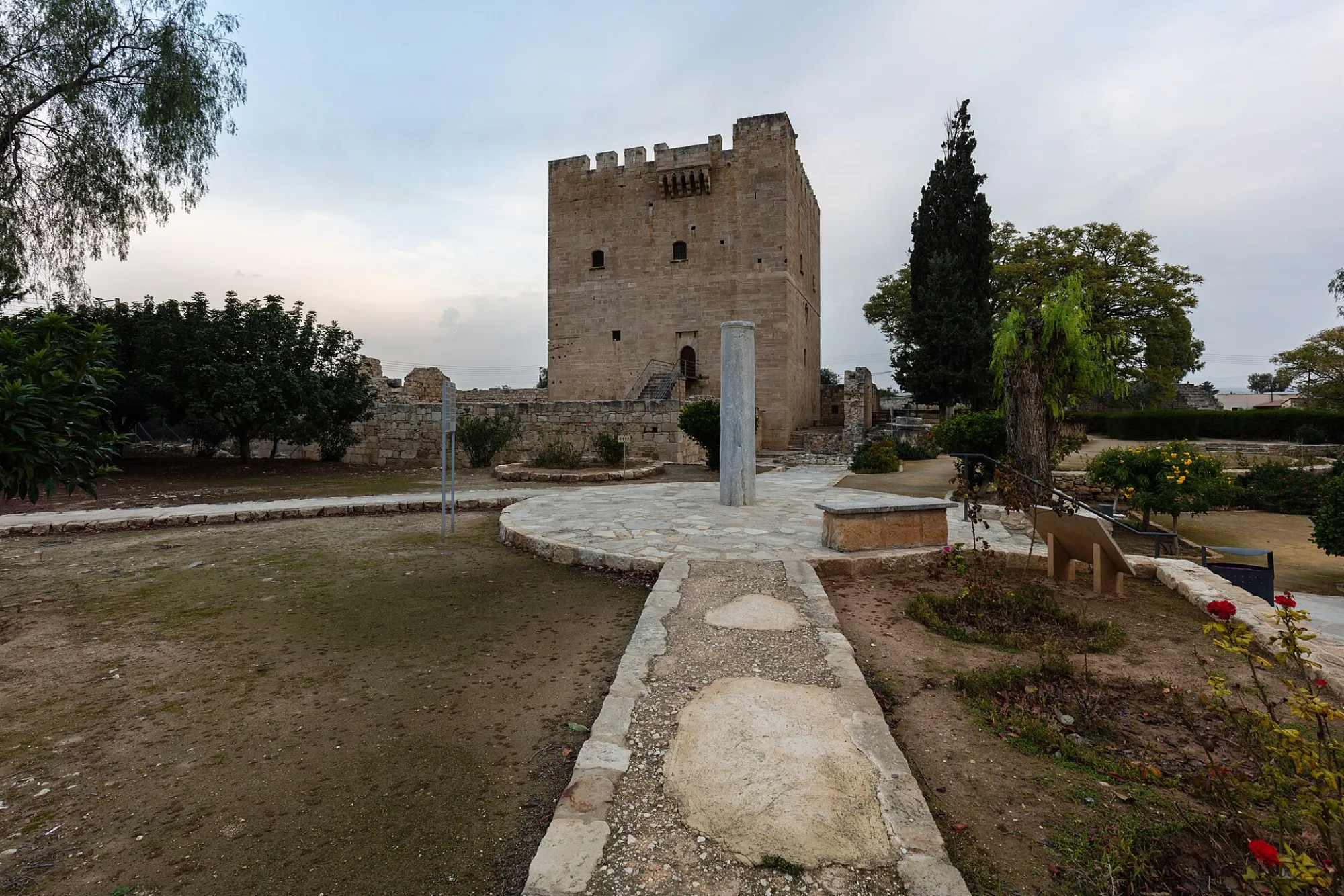
Kolossi Castle is a €2.50, roughly one-hour stop, and the best way to use it is as the short half of a day that also includes Kourion or the Limassol old town. It is a real medieval keep rather than a reconstruction, and it is compact enough that treating it as a destination in its own right usually disappoints. Treated as one deliberate stop on a route you are already driving, it is one of the better small-ticket visits in Cyprus.
One date is worth knowing if you are travelling this month. On 16 September the Department of Antiquities moves its sites from summer to winter hours, and Kolossi’s closing time drops from 19:30 to 17:00. A late-afternoon visit that works on 15 September does not work on 16 September.
Kolossi Castle at a glance
All of the figures below come from the official Visit Cyprus listing for Kolossi Medieval Castle, which also warns that hours and fees can change without notice.
| Detail | What the official listing says |
|---|---|
| Entrance fee | €2,50; 20% reduction for organised groups of more than 10 |
| Summer hours | 16 April to 15 September, daily 08:30 to 19:30 |
| Winter hours | 16 September to 15 April, daily 08:30 to 17:00 |
| Open | All year, except Christmas Day, New Year’s Day and Greek Orthodox Easter Sunday |
| Where | Kolossi, 14km west of Limassol on the road towards Paphos |
| Phone | +357 25 934 907 |
| Time to allow | About an hour, including the roof |
The phone number matters more than it looks. Visit Cyprus publishes it precisely because opening times at Department of Antiquities sites are not guaranteed, and one call is a better plan than arriving on the wrong side of a public holiday.
What you actually see
Kolossi is a single square keep of three floors, set inside a low walled enclosure with gardens. You enter above ground level by an external staircase, work up through the rooms and come out on the roof, which is where the views over the surrounding plain and vineyards open up. That is the whole visit. There is no museum wing, no long circuit and no site to walk.
The building you see is not the original. Visit Cyprus dates the first castle to the 13th century and says the present structure was rebuilt in the 15th. Wikipedia’s account puts the rebuild at 1454 under the Hospitaller commander Louis de Magnac, whose heraldic arms survive on the walls, and gives the keep as roughly 17 by 17 metres and 21 metres high inside an enclosure of about 30 by 40 metres. Those numbers are a useful sanity check on expectations: this is a tower, not a fortress complex.
Two things next to the keep are easy to walk past. The first is the ruined 14th-century sugar mill just outside, which Visit Cyprus records as part of the site. Cyprus exported sugar in the medieval period, and the mill is the physical evidence that the castle was the centre of a working estate rather than only a garrison.
The second is the wine. Visit Cyprus notes that after the fall of Acre in 1291 the castle served as the Grand Commandery of the Knights of the Order of St John of Jerusalem, that it passed to the Knights Templar in the 14th century, and that the Knights produced and exported a sweet wine known as vin de Commanderie. Commandaria still carries that name eight centuries later. If that thread interests you, the Cyprus wine tours guide covers the Commandaria region properly, and Omodos is the village most people pair with it.
Does the Department of Antiquities day card save you money?
This is the calculation nobody in the search results does for you. Alongside the €2.50 ticket, the department sells cards covering all of its museums and monuments: €8.50 for one day, €17.00 for three days, €25.00 for seven days. Whether the card wins depends entirely on how many sites you will genuinely reach in a day, and for the obvious Kolossi pairings it often loses.
Using the current official fees for the nearby sites, all published on Visit Cyprus:
| Your day | Paying at each gate | One-day card | Cheaper option |
|---|---|---|---|
| Kolossi only | €2.50 | €8.50 | Pay at the gate |
| Kolossi + Kourion | €7.00 | €8.50 | Pay at the gate |
| Kolossi + Kourion + Cyprus Medieval Museum, Lemesos Castle | €11.50 | €8.50 | Day card |
| Kolossi + Kourion + Medieval Museum + Amathous | €14.00 | €8.50 | Day card |
Kourion is €4.50, the Cyprus Medieval Museum in Limassol Castle is €4.50, and Amathous is €2.50. So the day card only starts paying at the third site, and the classic Kolossi and Kourion morning is cheaper bought as two separate tickets. Buy the card if you are deliberately doing an archaeology day; skip it if you are doing the sensible two-stop version.
If your base is Paphos rather than Limassol, the same arithmetic is worth running against the Paphos Archaeological Park and the Tombs of the Kings, which are the two department sites you are most likely to combine there.
The Kourion pairing, and how to shape the morning
Kolossi and Kourion sit on the same short stretch of the old Limassol to Paphos road, and they are complementary rather than repetitive. Kourion is a large open archaeological city with a theatre, mosaics and a headland setting that rewards a slow half-day. Kolossi is one dense building you can read in an hour. Doing the small one first and the large one second is the version that works.
A realistic shape from Limassol:
- Leave early enough to reach Kolossi soon after 08:30, when it is quiet and the stone is not yet baking.
- Give the castle an hour, including the roof and the sugar mill.
- Drive on to Kourion and give it the rest of the morning without a fixed end time.
- Keep the afternoon loose. Anything you add after Kourion tends to become a rush.
Do not reverse it. Kourion expands to fill whatever time you give it, and Kolossi arrived at in mid-afternoon in July is a hot climb up a stone tower with the light behind you.
If you only have a city break, the Limassol weekend itinerary makes the same point at trip level: one cultural outing on the second day, not two.
Getting there and practical details
The castle is 14km west of Limassol on the Paphos road, in Kolossi village itself. It is straightforward by car and it is the easier of the two stops to park at, which is another reason to take it first. If you are hiring a vehicle for the day, our guides to car hire in Cyprus and driving in Cyprus cover the things that actually catch UK visitors out, starting with driving on the left and the motorway naming.
It also sits directly on the corridor between the two western towns, so it pairs neatly with a change of base; our Paphos to Limassol guide sets out the stops worth making on that drive.
Without a car it is harder. Kolossi is a village stop rather than a resort attraction, so treat public transport as something to confirm rather than assume, and read our public transport in Cyprus guide before you build a day around a timetable. A guided Kourion and Kolossi tour is a legitimate alternative if you would rather not drive it.
Two honest cautions. The keep is entered by an external staircase and explored by internal stairs to the roof, so it is not a step-free visit, and the Visit Cyprus listing does not publish an accessibility note for this site: phone ahead if that matters to you. And there is very little shade inside the enclosure, which is the real argument for a morning visit between May and September.
Who should skip it
Skip Kolossi if you are already short of time in the Limassol district and have not yet seen Kourion, which is the more substantial site by a wide margin. Skip it if a stone tower with stairs and no interior collection is not what anyone in your group wants from a holiday morning. And skip it if you would be making a dedicated round trip from Ayia Napa or Protaras, because the drive is out of proportion to an hour-long visit.
Everyone else gets a well-preserved medieval building, a roof view over the vineyards that gave Commandaria its name, and change from a five-euro note. For the wider picture of what else the district holds, start with our Limassol guide. If you are crossing north, St Hilarion Castle in the Kyrenia mountains is a Byzantine fortress that the Lusignan kings used as a mountain retreat.
Hero photograph of Kolossi Castle by Diego Delso, Wikimedia Commons, licensed CC BY-SA 4.0.

Quick answers
Frequently asked questions
How much does Kolossi Castle cost?
Visit Cyprus lists the entrance fee as €2.50, with a 20% reduction for organised groups of more than 10 people. The Department of Antiquities also sells multi-site cards at €8.50 for one day, €17.00 for three days and €25.00 for seven days. Fees can change without notice, so check the official listing before you travel.
What are Kolossi Castle's opening times?
The official hours are daily 08:30 to 19:30 from 16 April to 15 September, and daily 08:30 to 17:00 from 16 September to 15 April. The site is open all year apart from Christmas Day, New Year's Day and Greek Orthodox Easter Sunday. Times are subject to change without notice.
How long do you need at Kolossi Castle?
About an hour is enough for most visitors. It is a single keep with three floors, a roof terrace, a small walled enclosure and the sugar mill remains alongside. Treat it as a stop rather than a day out, and plan a second site nearby if you have driven out for it.
Is Kolossi Castle worth visiting?
Yes, if you are already travelling the Limassol to Paphos road or you want a compact, genuinely medieval building for a small fee. It is not worth a special return trip on its own, which is why most people get more out of it combined with Kourion or the Limassol old town.