Limassol district · Wine country, monastery and a slower mountain stop
Omodos, Cyprus: how to plan the wine-village day well
Planning Omodos, Cyprus? See what the village is actually good for, how it fits a Limassol day, what to prioritise around the square and how to make a wine-country visit work safely.
- Filed under
- Places
- Updated
- 20 August 2026
- By
- The editors
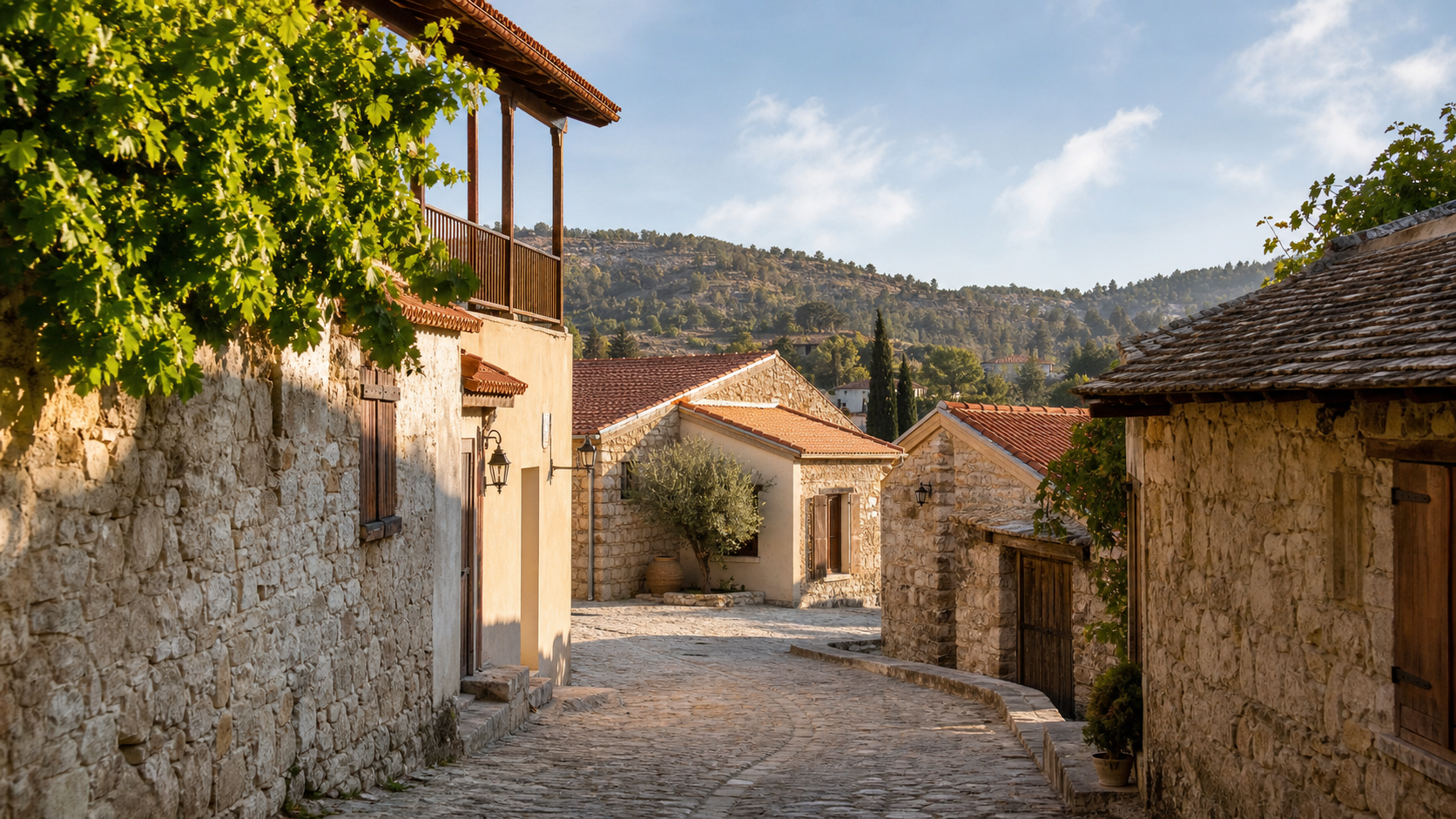
Omodos is worth visiting when you want a Cyprus day built around a village rather than a list of attractions: a cobbled square, stone lanes, Timios Stavros monastery and a wine-country lunch. It works best as one unhurried stop from Limassol or as the anchor of a carefully planned Krasochoria route. Do not make it a hurried add-on after a beach morning and before three tastings; the reward is in letting the day slow down.
For the wider decision between inland days, see our best villages in Cyprus guide. It helps distinguish Omodos’s wine-country rhythm from Lefkara’s crafts, Kakopetria’s heritage and Kalopanayiotis’s valley setting.
Omodos sits in Limassol district’s Krasochoria—the wine villages of the Troodos foothills. The official tourism portal places it at 800 metres above sea level and 42 km from Limassol, and names the E601 as one approach. That helps explain its appeal: it is inland enough to feel distinct from the coast, yet its centre is compact enough that you do not need a long attraction checklist.
Omodos at a glance
| Choose Omodos for… | Think twice if you need… |
|---|---|
| A slow village walk, lunch and wine-country atmosphere | A big-ticket attraction or a tightly timed day |
| The square, stone houses, craft context and a monastery visit | A guaranteed tasting, museum opening or parking space without checking first |
| A Limassol day trip that feels different from the seafront | A car-free plan with no confirmed return journey |
| One or two thoughtfully chosen nearby stops | A drive-yourself tasting day with nobody staying sober |
For the broader base decision, start with our Limassol guide. If the village is one part of a mountain day rather than the main event, our Troodos guide will help you choose the right side of the range. Omodos is in the wine-and-village part of Troodos, not a high-mountain trailhead.
What makes Omodos different
Visit Cyprus describes Omodos as a wine-producing village with a cobbled square, old stone-built houses, local wineries, a medieval wine press and the Monastery of Timios Stavros (Holy Cross) close together. That compactness is the practical advantage. Rather than spend the day in and out of a car, you can arrive, walk the centre and choose one or two things that genuinely interest you.
The official village listing also points to Zivania, handmade narrow-knit lace and arkatena bread. Those are useful cultural cues, not a shopping assignment. Browse with curiosity, ask what something is and how it is made, and buy only what you actually want to take home. A village visit is no less successful if it ends with a walk and lunch rather than a bag of souvenirs.
The key is to resist treating “wine village” as shorthand for drinking all afternoon. Omodos has a wider character than that: traditional lanes, religious heritage, food and local craft. A wine tasting can enrich the day, but it should not force the schedule or make the return drive unsafe.
What to prioritise around the square
The square is the natural starting point. Let the first walk be directional rather than exhaustive: take in the stone-built setting, see where the lanes lead and notice what is actually open before deciding what deserves more time.
Timios Stavros monastery is the cultural anchor. Visit Cyprus identifies it for its old icons and woodcarvings; the tourism authority’s Limassol religious route records the local tradition that it was established by Agia Eleni and that it keeps a relic known as Agios Kannavos. It is a living religious place, so dress respectfully and follow any guidance on entry and photography. Do not assume a particular interior, museum room or service will be accessible at the time you arrive—check directly if that detail is central to the trip.
The medieval wine press gives a useful link between the village’s architecture and its wine-making context. Treat it as a short cultural stop, not a reason to rush past everything else. The same goes for the lace-preservation centre and Icon Museum named by Visit Cyprus: they can be worthwhile additions when open, but live arrangements are more important than an online checklist.
A simple Omodos day from Limassol
Omodos needs a shape, not a minute-by-minute itinerary.
- Choose the point of the day before leaving Limassol. Is it village wandering, a lunch, a monastery visit or a tasting? One clear priority makes everything else easier.
- Start in the centre. Walk around the square and lanes before settling on food, a museum or a purchase.
- Make one cultural stop meaningful. Timios Stavros or the wine press is enough context for many visitors; do not turn both into a rush.
- Add one wine element only if transport is solved. Confirm visiting arrangements with the producer directly, and keep the driver out of the tasting.
- Choose a second village only if it improves the day. The official Krasochoria wine route runs through Omodos and villages including Lofou, Vouni, Koilani, Vasa, Malia and Arsos. They are options, not compulsory pins.
This makes Omodos particularly good for travellers staying in Limassol for several nights, couples who want a more food-and-culture-led inland day, and families who would rather have a village lunch and short walk than a long mountain drive. For a full week that balances inland and coastal days, our Cyprus family holiday guide has the bigger planning framework.
Wine tasting: make the transport decision first
Omodos sits on Visit Cyprus’s Krasochoria of Limassol Wine Route, a much wider route through the foothills. It is tempting to frame that as permission to visit as many wineries as possible. In practice, one planned visit or a guided wine day is usually better than trying to make several stops fit around unfamiliar roads.
If you are self-driving and wine is part of the day, nominate a non-drinking driver before the first booking or choose a taxi, private driver or organised tour. Check the winery’s own current page or contact it for its visiting times, booking policy and whether a tasting is offered that day. Those details can change by season, event and harvest period; this is not a place to rely on an old blog timetable.
Our Cyprus wine tours guide explains the Krasochoria, indigenous grapes and the decision between a tour and self-drive. It is the deeper resource if tasting is the main purpose. If the main purpose is simply a good village day, one glass with lunch—or no tasting at all—can be the more satisfying choice.
How to get to Omodos
The practical answer is usually car, taxi or organised tour. Visit Cyprus gives the E601 route, or the B8 followed by E802 and F825, and places the village 42 km from Limassol. A car gives the most freedom to combine Omodos with another village, but narrow, winding mountain roads make a modest plan more useful than an ambitious one.
For visitors who are hiring, read our Cyprus car-hire guide and driving in Cyprus guide before collecting the keys. They cover the choice of vehicle, left-side driving and the agreement checks that matter beyond the airport. Without a car, a taxi, driver or organised trip may be more straightforward than trying to connect local services around a lunch or a tasting. If you are considering a bus plan, confirm the live timetable, stops and final return service before committing to it.
When to go
Omodos is more about the day’s shape than a single perfect season. In warmer weather, set off early or make the hottest part of the day a long lunch and keep the lane-walking gentle. In cooler months, take a layer: the village’s higher setting can feel different from the coast. For any mountain day, use the forecast and road conditions to set the pace rather than forcing a plan made at a beach hotel.
There is one date worth treating carefully. Visit Cyprus says the Holy Cross religious fair is held each 14 September and lasts three days, with vendors gathering near the monastery. That could be a genuine reason to visit, but it is also a reason to check the current programme, access and parking arrangements with the local organiser before planning around it. A festival period will not have the same quiet-village rhythm as an ordinary weekday.
The verdict
Omodos succeeds when you let it be one good village day: arrive with a clear purpose, walk the square and lanes, give the monastery or wine press proper attention, eat well and add wine only when the transport plan is responsible. It is not a replacement for a Troodos hike or a beach afternoon. It is the Limassol-side counterweight to both—a compact, characterful way to understand why Cyprus’s inland routes deserve more than a quick photograph through a car window.
Sources for current practical details: Visit Cyprus’s Omodos village listing, the official Krasochoria of Limassol Wine Route and Visit Cyprus’s Limassol religious route. Check live venue, transport, weather and festival information before travel.
Quick answers
Frequently asked questions
Is Omodos worth visiting?
Yes, if you want a relaxed wine-country village day rather than a resort attraction. The appeal is the cobbled square, stone lanes, Timios Stavros monastery, traditional food and the chance to add a checked winery visit; it is less suitable for a packed itinerary or a car-free day with no transport plan.
What is Omodos famous for?
Omodos is known for its wine-producing setting in the Krasochoria of Limassol, Zivania spirit, handmade narrow-knit lace and arkatena bread. Visit Cyprus also highlights the square, medieval wine press and Timios Stavros monastery.
Can you visit Omodos from Limassol?
Yes. Visit Cyprus places Omodos 42 km from Limassol and gives the E601, or B8–E802–F825, as road approaches. A car, taxi, organised tour or designated driver is usually the simplest way to make the day flexible; confirm any return transport before travelling.
Can you combine Omodos with wine tasting?
You can, but treat the driving decision as the first decision. Check each winery's current visiting arrangements in advance, keep the number of stops modest and use a tour, taxi or sober designated driver if anyone is tasting.