Mountains · Villages, trails and cooler-air escapes
Troodos, Cyprus: how to plan the mountain day you actually want
A practical Troodos, Cyprus guide: choose the right villages, walks and cultural stops, plan a realistic day from the coast and know what to check before driving uphill.
- Filed under
- Places
- Updated
- 11 August 2026
- By
- The editors
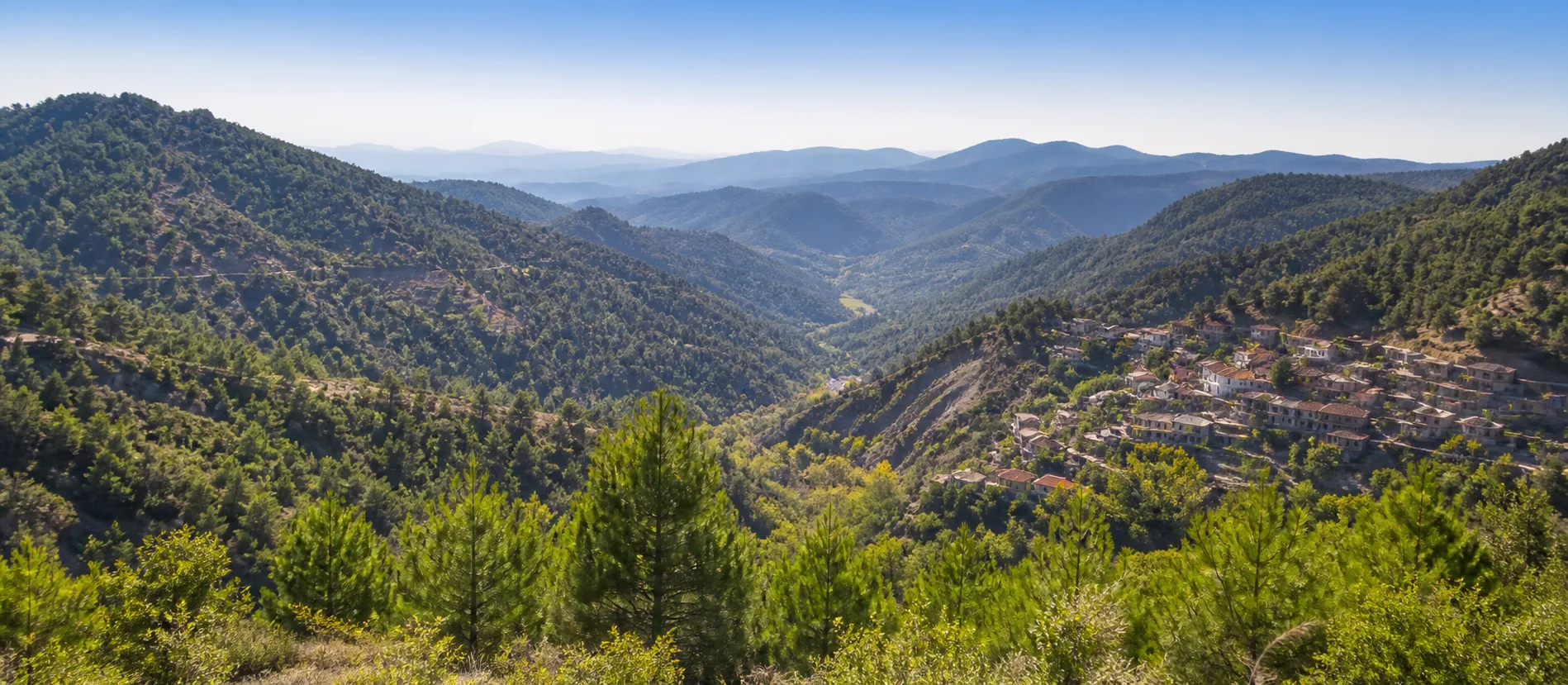
Troodos is worth the detour when you want Cyprus beyond the beach: choose one mountain theme — village, walk, wine or Byzantine art — and give it a full, unhurried day. The common mistake is treating it as a single sight. It is a broad mountain region, so a good plan is not a race to “do Troodos”; it is a coherent route with enough margin for winding roads, lunch and a weather change.
The Cyprus Deputy Ministry of Tourism describes the Troodos region as the island’s green heart: forests, valleys, orchards and traditional villages, with Mount Olympus at 1,952 metres. That mix is the appeal. In summer, the altitude can make a welcome break from the coast; in cooler months, it gives a very different kind of Cyprus day. It is not a theme park with a fixed checklist, and that is precisely why picking the right section matters.
Troodos at a glance
| Choose Troodos for… | Think twice if you need… |
|---|---|
| Pine forest, villages and a slower inland day | A walk-everywhere resort base |
| Marked trails and a change from coastal heat | A tight itinerary with several fixed appointments |
| Wine-country lunch or a cultural route | Guaranteed snow, waterfall flow or open venues |
| A car day or an organised tour | Flat, fast roads and spontaneous late-night transport |
Troodos can mean the central highland settlement and square, the slopes around Mount Olympus, or the much wider area of valleys and villages across Limassol, Nicosia, Paphos and Larnaca districts. For visitors, it helps to treat the square as a high-elevation hub, not the only place that counts. A wine-and-village day may work better on the Limassol side; a church-and-old-village day can take you towards Solea or Marathasa; a trail day needs the specific trailhead, not a generic pin called “Troodos”.
Pick one shape of day
The strongest first visit is usually one main activity plus a village meal. The table is a planning shortcut, not a promise of live conditions or opening hours.
| Your priority | A sensible focus | Build the day around |
|---|---|---|
| Forest and a walk | Upper Troodos / Platres side | One designated trail, water and sensible footwear |
| Village atmosphere and wine | Limassol foothills | Omodos, Lofou, Vasa or nearby producers, with a non-drinking driver or tour |
| Painted churches and heritage | Solea / Marathasa / Pitsilia side | One or two churches plus a nearby village, not all ten in one day |
| Cooler scenery with low commitment | Troodos Square and a short village stop | Views, a short marked walk and a flexible lunch |
For a wine-focused route, use our Cyprus wine tours guide as the detailed companion. It explains the responsible transport decision; this page is about deciding whether the mountains belong in your itinerary at all. Do not put a tasting and mountain driving in the same person’s job. Arrange a tour, taxi or designated driver if wine is part of the plan.
Villages: choose character, not a list
Omodos is the easiest fit for visitors who want a wine-village atmosphere, a wander and lunch. It is a good southern-side choice, but it is not interchangeable with every mountain village. Its role is food and wine culture rather than a high-mountain trailhead; our Omodos guide explains how to build that day around the square, monastery and a responsible wine plan.
Kakopetria suits a history-and-streets day. It is useful when you want traditional lanes and, nearby, the UNESCO-listed Agios Nikolaos tis Stegis. Our Kakopetria guide explains how to make that Solea Valley day feel unhurried; the tourism authority’s Troodos nature-trails guide specifically highlights the traditional neighbourhood and narrow streets.
Platres is a practical name for walkers because it sits close to forest routes and the Caledonia (Kalidonia) Waterfall Trail. Visit Cyprus lists this as a 3 km linear trail with a difficult rating, dropping 333 m from the Troodos end to Psilo Dendro; our Caledonia Waterfall guide explains which trailhead to start from and why that choice matters more than the distance. Its own current trail page is the place to check before setting out, particularly after rain or in heat. For a different, shorter but still terrain-led forest stop, see our Millomeris Waterfall guide: it explains why the signed trail is usually a better decision than assuming the nearby unmade-road approach suits every hire car. If you are trying to pick between the mountain falls, our Cyprus waterfalls guide compares all seven by height, access and effort, including the three you can more or less park beside.
Kalopanagiotis, Pedoulas and the Marathasa valley make sense when culture and a slower village route matter more than a single summit view. Kyperounta and the Pitsilia villages offer another higher, vineyard-and-forest side of the range. Rather than claiming a “most beautiful” village, match the stop to your day: wine, lanes, a church, fruit-country scenery or a walk.
Walks and nature: be specific
Troodos is excellent for walking, but “a Troodos hike” is not enough information to leave the hotel with. The official nature-trails directory lists routes by district and forest area, including the Artemis and Atalanti circular trails in the Troodos Forest and the Caledonia route in Limassol district. Choose one route, read its length, elevation and difficulty, then decide whether it suits the group and the forecast.
Take drinking water, sun protection, a charged phone and shoes with grip. A shaded start can become a very exposed section, and wet stone or leaf litter changes a route quickly. In high summer, start early; in winter, treat the mountain day as conditional. The Cyprus in winter guide explains why snow and mountain roads should be checked close to travel rather than assumed from a seasonal photo.
The hiking reward is variety rather than one dramatic landmark: pine forest, valley views and the sense of moving through a landscape that does not resemble the resort coast. If that variety sounds more appealing than maximum distance, choose a short, marked route and leave time for a village stop afterwards. Our hiking in Cyprus guide compares the mountain option with Akamas and Cape Greco, and explains how to use the official difficulty grades. If the high point itself is what drew you here, our Mount Olympus guide explains what you can and cannot reach at 1,952 metres before you drive up.
Byzantine churches: make one meaningful stop
Troodos contains a rare concentration of painted churches. Visit Cyprus sets out a Byzantine route of ten churches on the UNESCO World Heritage List, spread across Pitsilia, Solea and Marathasa. They are spread out, so do not design a first day around ticking off all ten.
A better approach is to select one church that lies naturally on your chosen road, then give it time. Dress respectfully, follow any photography guidance and verify the current opening arrangements directly before you travel. These are living religious places as well as cultural sites; the visit is better when it is planned with that in mind.
For a major monastery rather than a painted-church route, Kykkos Monastery is the distinct Marathasa Valley choice. It has its own museum and mountain-road logistics, so treat it as the cultural centre of the day instead of a quick stop between every Troodos landmark.
Driving Troodos: plan for the road, not the map pin
A car gives the most flexibility, but mountain driving is a different task from a coastal transfer. Roads can be narrow and sinuous; distance on a map does not equal a quick journey. Start with daylight, keep the route modest and save the accommodation address offline before leaving a coverage area. Do not rely on a generic online travel time when a lunch booking, rain or a scenic stop would make a late return stressful.
Our Cyprus car-hire guide explains the booking and permitted-road checks. The important point here is simple: a normal hire car and a map are not blanket approval for every forest or unsurfaced road. Follow the rental agreement, avoid forcing a route that looks unsuitable on the day, and choose a guided option if the driving would stop the day being enjoyable.
From Limassol, Troodos works naturally with the wine-country foothills; from Paphos, it is a longer inland day, best kept to one route rather than paired with several coastal attractions. Our Paphos to Troodos transport guide compares car, tour and public-transport planning for that specific start point. From Nicosia or Larnaca, select the eastern or northern side that serves your actual stops. A tour can be the better answer if nobody wants to navigate bends, parking and a return in changing weather.
When should you visit Troodos?
There is no single “best” month because the right answer depends on your purpose.
| Season | Best for | Plan around |
|---|---|---|
| Spring | Green landscape and walking potential | Changeable rain and trail conditions |
| Summer | Cooler mountain air and village lunches | Early starts, water and sun protection |
| Autumn | Walking, villages and wine-country routes | Shortening daylight and venue checks |
| Winter | A coastal-holiday contrast and possible snow at altitude | Forecast, road conditions and flexible plans |
Snow at high elevation is possible in winter, but it is not an attraction to book blindly. Check the weather, road information and the ski operator’s current status immediately before a mountain trip; our skiing in Cyprus guide explains what the ski area actually offers and which conditions pages to read on the day. If conditions are poor, a lower village lunch, museum or coastal day is a better holiday decision than trying to make a snowy road happen.
The verdict
Go to Troodos for a deliberately different Cyprus day: one trail, one village, one cultural stop or one wine-country route. It rewards a narrower plan than the coast because the landscape is spread out and the details are weather-led. Start with the question “what kind of day do we want?” and Troodos becomes one of the island’s most memorable contrasts — without becoming an exhausting box-ticking drive.
Quick answers
Frequently asked questions
Is Troodos worth visiting?
Yes, if you want a contrast to Cyprus's coast: forest, mountain villages, a walk or a cultural stop. It works best when you choose one or two priorities rather than trying to cross the whole range in a rushed day.
What is there to do in Troodos?
Build a day around a village, a marked trail or waterfall area, a winery or a painted church. Troodos Square is useful for orientation, but the wider range is the destination rather than one single attraction.
Can you visit Troodos from Paphos or Limassol?
Yes, by car or an organised tour. A day trip is more satisfying when you select one side of the range and allow time for bends, parking, a meal and short walks instead of planning several distant stops.
Does it snow in Troodos?
Snow can fall at higher elevations in winter, including around Mount Olympus, but it is weather-dependent. Check the forecast, road conditions and any ski-operation information shortly before travel; never treat snow as guaranteed.