Rural Cyprus · Choose the village for the day you want
Best villages in Cyprus: four inland days worth planning properly
The best villages in Cyprus are not interchangeable. Compare Lefkara, Omodos, Kakopetria and Kalopanayiotis by craft, wine country, heritage and pace.
- Filed under
- Places
- Updated
- 28 August 2026
- By
- The editors
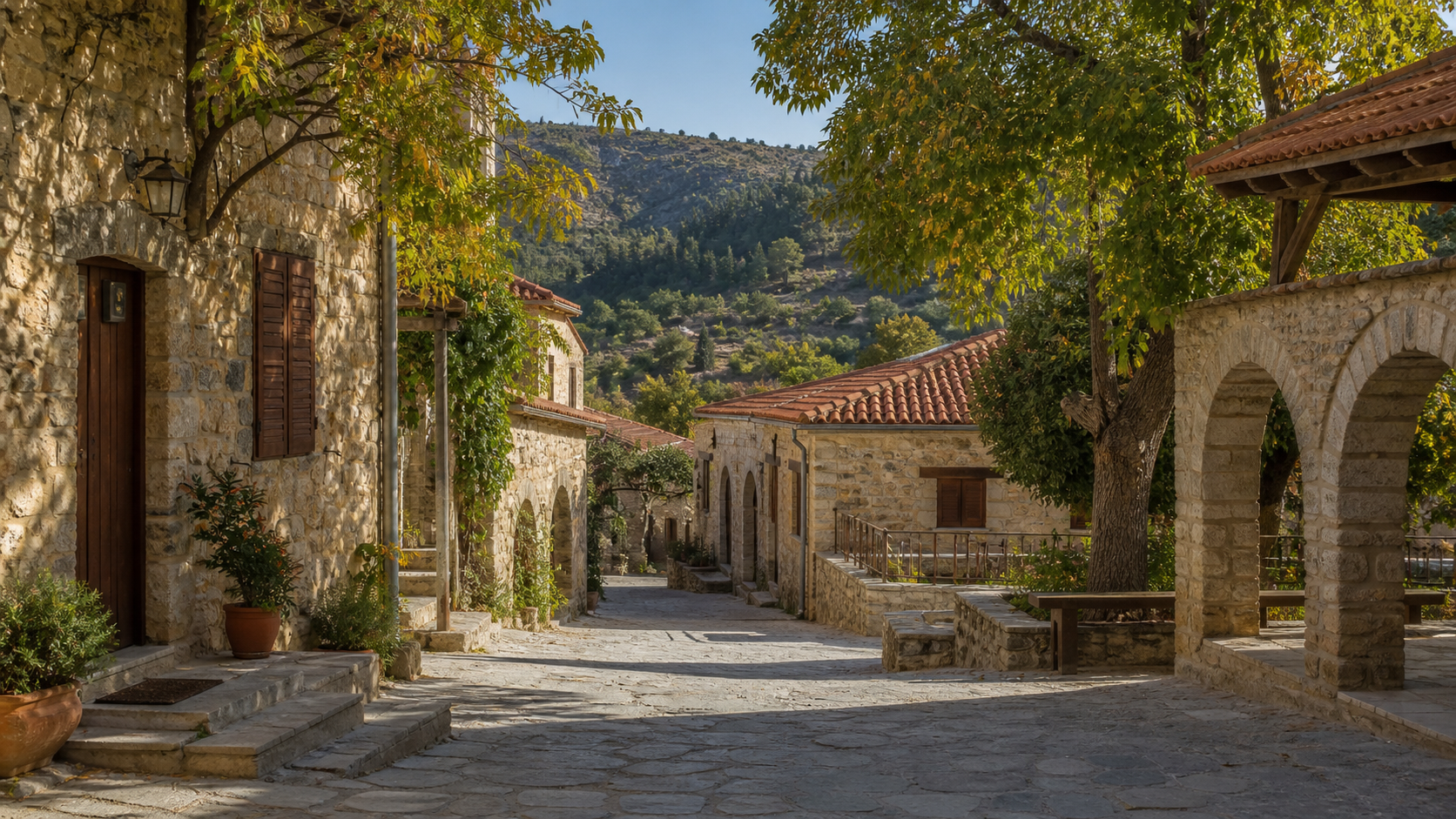
The best village in Cyprus is the one that matches the day you actually want. Choose Lefkara for craft and stone lanes, Omodos for wine-country atmosphere and a slow lunch, Kakopetria for an old quarter plus nearby Byzantine heritage, or Kalopanayiotis for the Marathasa Valley and a serious monastery visit. They are all photogenic; that is not enough reason to treat them as interchangeable.
Cyprus’s official tourism portal lists villages across every district, from coastal and wine-country settlements to cool Troodos communities. The useful distinction is not a league table but the character of the outing: craft, food, heritage or a change of landscape. Start with one priority, let the route stay modest and confirm the practical details that can change — transport, opening arrangements, weather and any event — with the relevant operator before you leave. Visit Cyprus’s village directory is a good official starting point.
The quick comparison
| Village | Choose it for | Best base | Do not expect |
|---|---|---|---|
| Lefkara | Lefkaritika lace, silver and an unhurried craft-led walk | Larnaca or Limassol | A beach day or a large ticketed attraction |
| Omodos | A cobbled square, monastery, food and wine-country context | Limassol | A fast multi-winery drive with no transport plan |
| Kakopetria | Old stone lanes, a wooded valley and Agios Nikolaos tis Stegis nearby | Nicosia or a dedicated Troodos day | A quick add-on after a coastal morning |
| Kalopanayiotis | Marathasa Valley scenery and the St John Lampadistis monastery complex | A dedicated Troodos day | A rushed stop between several far-apart villages |
Lefkara: choose craft over a checklist
Lefkara is the right village when the point of the day is to walk, look closely and understand a living craft tradition rather than chase a blockbuster sight. Pano Lefkara is the part most visitors mean: stone streets, workshops and the village centre. The craft is the important context. UNESCO inscribed Lefkara lace, or lefkaritika, on its Representative List of the Intangible Cultural Heritage of Humanity in 2009; it describes lace-making as central to local identity.
That makes Lefkara a better choice than a generic “pretty village” label suggests. Browse with curiosity, but do not turn craft into a compulsory shopping exercise. A walk, coffee and one thoughtful look at the lace or silver work can be the whole point of the visit. Our detailed Lefkara guide explains the difference between Pano and Kato Lefkara, what to prioritise and how to shape an unhurried day.
Choose Lefkara from Larnaca when you want an inland contrast without making the week entirely mountain-focused. It can also suit a Limassol stay, but do not combine it with Omodos merely because both appear on a map. They reward different tempos.
Omodos: the Limassol-side wine-village day
Omodos is the best fit when lunch, a compact square and the Troodos foothills are the centre of the plan. The official tourism portal places the village in Limassol district’s Krasochoria wine area, at 800 metres in the Troodos range and 42 km from Limassol. It highlights the square, stone houses, medieval wine press and Timios Stavros monastery — enough ingredients for a good day without a long attraction list.
Treat wine as context, not a reason to schedule three tastings around unfamiliar roads. If tasting is part of the day, decide the transport first: use a driver, a tour or a non-drinking driver, and check the winery’s current booking terms directly. If the aim is simply a village day, a meal and a walk around the lanes can be more satisfying than an ambitious route.
For the full practical picture, use our Omodos guide, then pair it with the island-wide Cyprus wine tours guide only if wine is genuinely the priority. Omodos is not a substitute for a high-Troodos walk; it is the food-and-culture counterweight to one.
Kakopetria: old lanes and a heritage stop nearby
Kakopetria suits a different kind of village day: a wooded Solea Valley setting, restored old-quarter lanes and one significant church visit nearby. Visit Cyprus identifies the old quarter’s stone-paved alleys and traditional wooden-balcony houses as a protected cultural-heritage area. It also places Agios Nikolaos tis Stegis about 5 km from the village and notes its painted murals, which range from the 11th to the 17th centuries.
Agios Nikolaos tis Stegis is part of UNESCO’s Painted Churches in the Troodos Region, a group of ten richly decorated monuments. It is therefore worth treating as a proper cultural stop, not a box to tick between lunch and a drive elsewhere. Dress respectfully, follow local guidance on photography and confirm live visitor arrangements before setting out.
Kakopetria works well from Nicosia or as the focus of a Troodos day when you want architecture and heritage more than a winery route. Begin with the old quarter, then decide whether the church deserves the rest of the afternoon. Our Kakopetria guide has the detailed route logic and explains why it should not be treated as interchangeable with Omodos.
Kalopanayiotis: choose the valley and monastery together
Kalopanayiotis is the village to choose when you want the landscape and the heritage stop to be part of the same day. It sits in the Marathasa Valley, and the local community’s visitor information centres on the St John Lampadistis monastery, a complex of three churches under one large timber roof. The monastery is also one of UNESCO’s Painted Churches in the Troodos Region.
This is a good choice for visitors who prefer a serious cultural anchor over a shopping-and-lunch itinerary. The local site also points to traditional houses, a Venetian bridge and valley heritage, but do not feel obliged to complete every item. Mountain roads, weather and shorter winter daylight all make a smaller plan better. Start with the monastery, check its arrangements directly and add only what still feels relaxed. Our Kalopanagiotis village guide has the monastery’s opening days (it closes on Mondays), drive times and the Christmas Village dates.
Kalopanayiotis is particularly rewarding when you have made room for a dedicated inland day. Pairing it with several more distant villages turns the best part — the change of pace — into a drive. For a broader hill-country decision, our Troodos guide helps you choose a sensible side of the range.
How to plan a Cyprus village day without spoiling it
The villages are accessible in different ways, but the same planning rules make every version better.
- Pick one main village. Add a second only if it lies naturally on the route and improves the day, not because a list told you to collect it.
- Solve the return journey before lunch. A hire car is flexible, but read our Cyprus car-hire guide and driving guidance before mountain roads. Without a car, check the live bus timetable or arrange a taxi, driver or tour in advance.
- Check the detail that matters most. That might be a monastery’s visiting arrangement, a lace workshop, a winery booking, accessible parking or the last bus. Do not rely on a year-old opening time.
- Use the weather honestly. In warm months, start early, take water and allow a long lunch. In cooler months, bring a layer, watch for wet stone and do not force a mountain route in poor conditions.
- Be a guest in a lived-in place. Keep noise low on residential lanes, do not block doorways for photographs and use designated parking. A traditional village is not an open-air theme park.
Which village should you choose?
Choose Lefkara if craft, lace and a compact inland day are the point. Choose Omodos if you want food, a square and wine-country atmosphere from Limassol. Choose Kakopetria for old lanes plus a Byzantine-heritage focus. Choose Kalopanayiotis for the Marathasa Valley and St John Lampadistis.
The common mistake is trying to visit all four as proof that you have “done” rural Cyprus. The better trip picks one village that fits the day’s purpose, gives it enough time and lets everything else stay optional.
Sources for durable context: Visit Cyprus’s village directory, Visit Cyprus’s Omodos listing, UNESCO on Lefkara lace and UNESCO’s Painted Churches in the Troodos Region. Check current weather, road conditions, transport, event and venue information directly before travelling.
Quick answers
Frequently asked questions
What are the best villages to visit in Cyprus?
Lefkara is the choice for lace and silver craft; Omodos for a wine-country square and a slow lunch; Kakopetria for old lanes and nearby Byzantine heritage; and Kalopanayiotis for the Marathasa Valley and the UNESCO-listed St John Lampadistis monastery. The best one depends on the kind of day you want, not a universal ranking.
Can you visit Cyprus villages without a car?
Sometimes, but it needs more checking than a town day. A taxi, private driver or organised tour can be simpler for a single village, especially when you need to return after lunch or combine a village with a church or winery. Confirm the current timetable, stop and final return service directly if you are relying on a bus.
Which Cyprus village is best for a day trip from Limassol?
Omodos is the most natural Limassol-side choice when you want a compact wine-village day. Lefkara can also work from Limassol when traditional crafts are the priority. Choose one, rather than trying to force several mountain villages into the same day.
Which village is best for Byzantine churches in Cyprus?
Kakopetria and Kalopanayiotis are especially strong choices. Agios Nikolaos tis Stegis near Kakopetria and the St John Lampadistis monastery by Kalopanayiotis are part of UNESCO's Painted Churches in the Troodos Region. Check current visitor arrangements before travelling.
When is the best time to visit Cyprus villages?
Spring and autumn are often the easiest for walking, but the practical answer is to use the forecast for your exact day. In summer start early and take water; in winter allow for cooler, wetter mountain conditions and shorter daylight.