Limassol · Castle, old port and the historic centre
Limassol Old Town: what to see, where to start and how long to allow
A practical guide to Limassol Old Town: the castle, old port, market and a realistic self-guided walk through the historic centre without overplanning it.
- Filed under
- Places
- Updated
- 6 September 2026
- By
- The editors
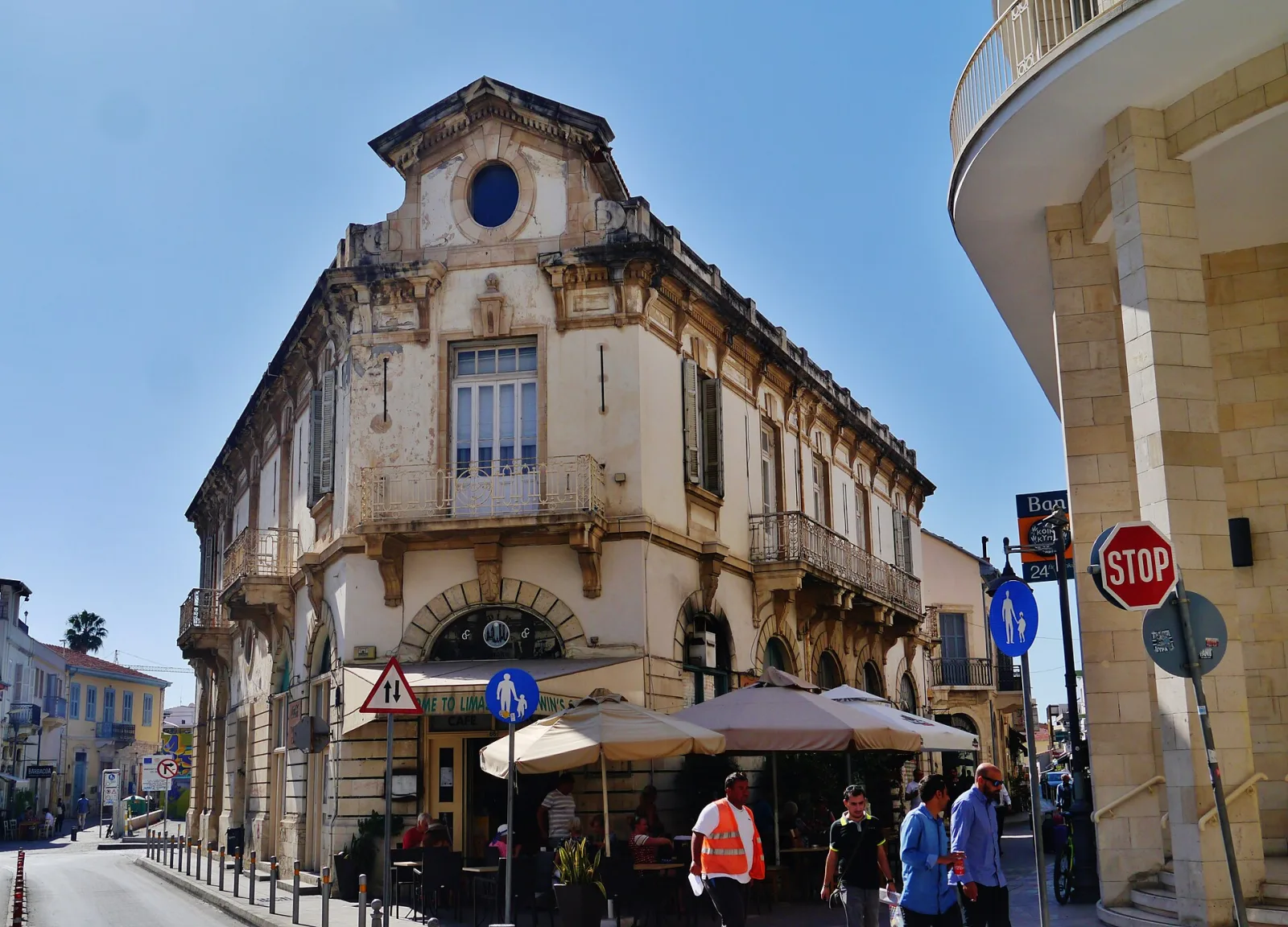
Limassol Old Town is worth two to three unhurried hours when you want the city’s historic core rather than another stretch of seafront. Start around the old port and Limassol Castle, use the lanes behind it to reach the market and Saripolou Square, then decide whether you want to continue towards the marina or finish with a coffee and a meal nearby. It is a compact, lived-in centre—not an open-air museum—so the pleasure is in letting a few real stops set the pace.
You are coming to see how a medieval castle, old harbour, municipal buildings, religious landmarks and modern social spaces occupy the same few streets. For the wider decision about where Limassol fits in a holiday, start with our guide to things to do in Limassol. This page is the focused plan once you have decided to spend time in the centre.
Limassol Old Town at a glance
| What to know | The practical answer |
|---|---|
| Best starting point | The old port/castle area, where the historic centre is easiest to understand |
| Sensible time to allow | Around 2–3 hours, plus time for the castle museum or a meal |
| Official route | Limassol Tourism’s circular historical-city-centre route: 2.06 km, 20 stops, about 2.5 hours |
| Main landmark | Limassol Castle, home to the Cyprus Medieval Museum |
| The character | Narrow streets, older architecture, the old harbour, market area, cafés and cultural spaces |
| Best way to treat it | A short self-guided walk with room to stop, not a race through every pin |
| Good pairing | The marina and waterfront, or a longer Limassol weekend itinerary |
The Limassol Tourism Board’s Historical City Centre Route is the best framework for a first visit. It is a 2.06 km circular route with 20 stops, described as a relaxed two-and-a-half-hour experience. That is an unusually helpful official benchmark: enough structure to avoid aimless backtracking, but short enough that you can edit it for heat, a museum visit or a lunch booking.
Start at the old port, then let the castle set the route
The old port is the clearest point of orientation. The tourist information office is there, and the historic centre unfolds inland from it while the marina and waterfront run alongside it. Take a look at the area before you begin walking; it makes the later transition from the small lanes to the modern harbour feel intentional rather than confusing.
From there, head to Limassol Castle. Visit Cyprus places it on Richardou and Berengarias Streets, near the old port, and explains that the current castle was built in the 13th century on the site of an earlier Byzantine castle. It now houses the Cyprus Medieval Museum, with medieval pottery, tombstones, Byzantine silver, weapons, crosses and coins.
The familiar Richard the Lionheart story belongs here too, but treat it as tradition rather than the reason to hurry through: the official tourism page says legend has Richard marry Berengaria of Navarre in the castle chapel in 1191. The more reliable visitor point is simpler: the castle gives the old town a physical centre, and the museum turns a street walk into a historical visit.
Opening days, hours and entry prices are live details. Visit Cyprus’s current castle listing says they can change without notice, so check it before making the museum the non-negotiable part of your day—especially on a public holiday.
Use the route as a menu, not a checklist
The official circuit begins at Michalis Kakogiannis Square and includes the old-port pier, Kebir Mosque, Turkish Baths, the Limassol Agora, Saripolou Square and other architectural and cultural stops. That selection explains the real shape of the old town: it is not one preserved quarter bounded by a gate; it is a working historic centre with layers from different periods.
For most first-time visitors, this is a sensible edited version:
- Old port and castle: get your bearings, then choose whether the museum is worth an indoor hour for your group.
- The streets behind the castle: take the turns that interest you rather than hunting for a perfect photo. Look for older façades, balconies and the contrast between restored buildings and everyday city life.
- Market and Agora area: the Limassol Tourism Board identifies the Agora as a regenerated historic market building. Think of it as a social and food stop, not proof that every stall or venue will suit every visitor.
- Saripolou Square and the historic-centre lanes: this is a useful place to pause or decide whether you have had enough walking. Its present energy grew with the nearby university and building restoration, according to the official route.
- Back to the water: return via the old port, or carry on to the marina and the promenade if the weather and your energy are still good.
That is deliberately not a turn-by-turn navigation claim. Streets, access and businesses change, and an app is better at the next corner than a static article. Open the official route on your phone, then allow it to be a guide rather than a test you have to pass.
What the old town is—and what it is not
Limassol’s historic centre rewards people who like a city that has not been frozen for visitors. You will find the castle, a mosque, baths, churches, an older municipal-market building, cultural venues, everyday commerce and newer hospitality all within a small area. The textures are part of the point: not every street is polished, and the waterfront development sits close to the historic core rather than at a respectful distance.
That makes it a particularly good choice for a late-afternoon or early-evening walk, when you can continue into dinner without adding a journey across town. It is less compelling if your priority is a major archaeological site, a broad beach or a day that needs lots of ticketed attractions. In those cases, a Kourion visit, a beach day or the larger city itinerary may be the better use of limited holiday time.
Food is part of the atmosphere, but it is the least sensible thing to pre-decide from an old listicle. Pick an area that appeals, then check a restaurant’s own current opening days, menu and reservation policy. Our Limassol restaurants guide is a starting point for the neighbourhoods and styles; use current venue information before treating a name as a plan.
Pair it with the waterfront, not a packed day
The old town works best as the historic half of a city day. The waterfront makes the obvious contrast: the old port, marina and wider seaside park are close enough to connect on foot, but different enough that the day does not blur into the same streets twice. Walk only the amount of promenade that feels pleasant; there is no prize for completing a long coastal route after two hours in the sun.
If you have a weekend, make the old town, harbour and waterfront your first-day anchor, then choose one distinct direction for the next day—Kourion or the wine villages—rather than squeezing both into a short break. Our two-day Limassol itinerary lays out that choice without pretending all the district’s headline sights belong in 48 hours. Comparing historic centres across the island, the Larnaca Old Town guide covers a smaller, walkable centre built around one church and an artists’ quarter rather than a castle.
Practical planning that stays useful
Save the castle, old port and the tourist-board route before you travel, then check a current map for your exact arrival and return. That is more reliable than copying a parking recommendation or a bus timetable that may be stale. If walking comfort or step-free access matters, confirm it directly with the museum or venue you plan to enter; historic buildings and narrow central streets are not a substitute for a published accessibility statement.
In warm weather, start early or leave the walk until later in the afternoon. Take water, wear shoes for paving and let the centre remain a compact city walk.
FAQs
Is Limassol Old Town worth visiting?
Yes. It is a compact, easy-to-pair historic centre where the castle, old port, streets and market area make sense together. Give it a couple of hours and treat it as a city walk rather than a grand sightseeing circuit, then head east to the coast; our Limassol beaches guide covers which beach suits the rest of the day.
How long does the Limassol historic-centre route take?
The Limassol Tourism Board describes its circular route as 2.06 km, with 20 stops and a relaxed duration of about 2.5 hours. It is fine to shorten it; the castle and old-port area make a complete visit even when you do not do every stop.
Can you visit Limassol Castle on the walk?
Yes. It is near the old port and houses the Cyprus Medieval Museum. Confirm current opening details and admission directly with the official listing before you go, particularly around public holidays.
Should you visit the old town or the marina?
Choose the old town for historic streets, the castle and a more layered city walk. Choose the marina for a polished waterfront setting. On a first visit, the better answer is usually both: old town first, then the harbour and waterfront if you still want to walk.
Sources for current visitor information: Limassol Tourism Board’s Historical City Centre Route, Limassol Tourism’s route announcement and Visit Cyprus’s Cyprus Medieval Museum / Limassol Castle listing. Route access, museum arrangements, individual businesses and public-space conditions can change; confirm the details that matter to your day before travelling.
Hero photograph: “Limassol Altstadt” by Zairon, Wikimedia Commons, licensed CC BY-SA 4.0.

Quick answers
Frequently asked questions
Is Limassol Old Town worth visiting?
Yes, especially if you want a compact change from the beach districts and marina. The castle, old port, historic streets and municipal-market area are close enough for a useful two- to three-hour wander; it is more satisfying as a lived-in city centre than as a collection of blockbuster sights.
How long do you need in Limassol Old Town?
Allow about two and a half hours for a relaxed historic-centre walk, or longer if you visit the Cyprus Medieval Museum in Limassol Castle and stop for food. The Limassol Tourism Board’s official circular route is 2.06 km and lists 20 stops, but you do not need to complete every one.
What is there to see in Limassol Old Town?
Start with Limassol Castle and the old port, then explore the streets around the castle, the historic market and Saripolou Square. The reward is the relationship between the old harbour, historic architecture and present-day cafés, shops and cultural spaces rather than one single monument.
Is Limassol Castle in the old town?
Yes. Limassol Castle stands near the old port in the historic centre and houses the Cyprus Medieval Museum. Confirm the museum’s current opening days, hours and admission arrangements with the official source before you make it the fixed point of a day.