October · Still summer luggage, with one weather-aware extra
What to pack for Cyprus in October: a practical UK checklist
Packing for Cyprus in October? Start with swimwear, light clothes, sun protection and walking shoes, then add layers and a compact rain option for your plans.
- Filed under
- Plan your trip
- Updated
- 26 August 2026
- By
- The editors
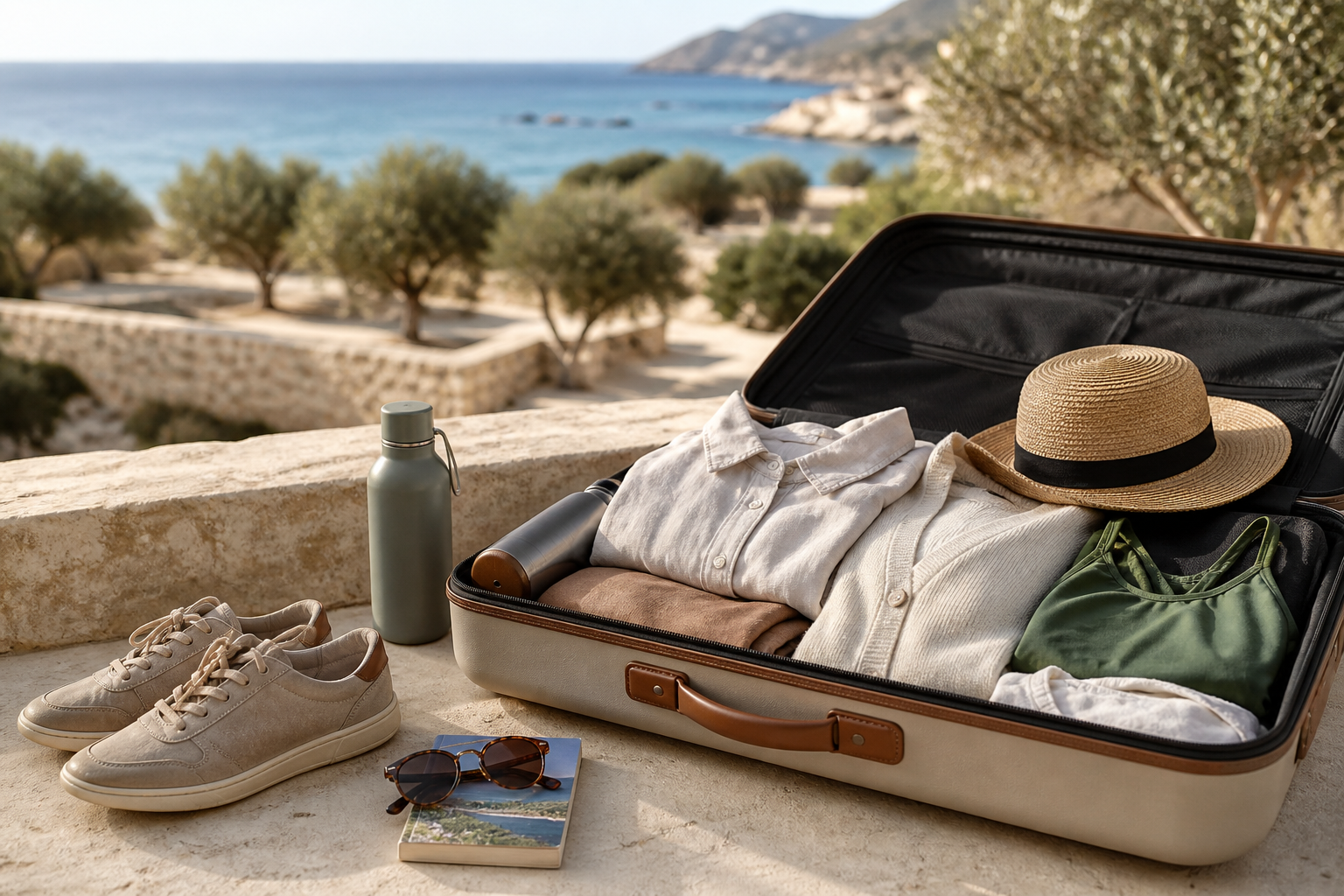
Pack for late summer, then add one light layer and a compact rain option. For an October holiday in Cyprus, the useful core is still swimwear, breathable daytime clothes, sun protection and shoes you can walk in. The adjustment from September is not a winter wardrobe: it is flexibility for cooler evenings, a higher-altitude day or a passing shower.
The official Cyprus tourism climate guidance describes the island’s summer as running from mid-May to mid-October. Its traveller handbook gives the practical version: light clothes in the day, with a medium layer for October evenings. Those are broad island-wide guides, not a forecast for your exact resort or dates. Start with the bigger Cyprus in October guide, then check a forecast close to departure before deciding whether the rain layer will leave the suitcase.
The short October packing list
For a normal coastal week, start here:
- light tops, shorts, skirts, dresses or loose trousers you will genuinely wear in warm weather;
- swimwear, a cover-up and sandals or beach footwear;
- a hat, sunglasses and the sun protection you normally use;
- comfortable trainers or walking shoes for streets, sites and excursions;
- one light long-sleeve layer, such as an overshirt, cardigan or thin jacket;
- a compact rain layer or small umbrella, especially for a late-October trip; and
- a refillable bottle, small day bag, passport, medication and charging cable in hand luggage.
This is deliberately a short list. The point is to pack things that work across a beach afternoon, a walk around an archaeological site and dinner outdoors, rather than bringing separate outfits for every imagined version of the holiday.
Pack for the dates and the plan, not the word “autumn”
October does not behave as one identical week. Earlier dates can still feel much more like summer; later dates bring a greater chance that a layer or rain cover earns its space. Coastal evenings, an air-conditioned airport transfer and the Troodos foothills will also feel different from one another.
Use the forecast for your actual base and the activity list you have booked. A beach-first break needs a different bag from an itinerary built around a vineyard lunch, a long trail or a day at an exposed archaeological site. For an outing into the hills, the Troodos guide is a better starting point than guessing from a seafront forecast. If your days will be on or near the water, our best beaches in Cyprus guide can help choose a coast before you decide how much beach kit to bring.
| Your October plan | Pack first | Add only if it is really in the plan |
|---|---|---|
| Beach or pool week | Swimwear, cover-up, sandals, hat and sun protection | A compact towel if accommodation does not provide one |
| Towns, ruins and meals out | Breathable clothes, secure walking shoes and a small day bag | A simple layer to cover shoulders or knees if requested at an active religious site |
| Boat day | Swimwear, sun protection, a secure bag and a light layer | A rain layer only if the operator or forecast makes it sensible |
| Troodos or a proper marked walk | Shoes with grip, water, hat and clothes comfortable in exposed terrain | An extra light layer and route-specific kit after checking conditions |
| Cabin-bag trip | Mix-and-match light clothes, swimwear and one pair of walking shoes | A laundry plan instead of duplicate “just in case” outfits |
Clothes and footwear that do the useful work
Bring light clothes you can rewear and combine. A linen shirt or thin long-sleeve top is more versatile than a heavy jumper: it can take the edge off after sunset, cover you on the flight and sit comfortably over swimwear. One smarter but comfortable outfit is enough if you expect a special dinner; do not fill the case for a formal dress code you have not actually been given.
Footwear is the easiest place to make an otherwise good packing list unhelpful. Beach slides suit the pool, but they are not a default shoe for uneven stone, steps or a long day around a site. Take sandals for the beach and one secure pair for everything else. If a trail is genuinely part of the plan, wear in shoes with grip before the trip and take socks that you know work with them. The Baths of Aphrodite guide is a useful reminder that a scenic walk can still mean rocky ground.
For active churches or monasteries, modest dress requests vary by place and can change. A simple layer that covers shoulders or knees is easier than assuming an all-island rule. Check the venue’s own guidance when the visit is central to your day.
Beach kit, sun protection and the small rain contingency
October is not a reason to leave the beach kit behind. Put swimwear, a cover-up, beach footwear, sunglasses and a hat in the bag before deciding on another pair of trousers. The sea may still be inviting, but an average temperature is not a safety signal: check the conditions and flags at the beach you choose, supervise children closely and do not force a swim because it was part of the plan.
The same practical rule applies to sun protection. Lower UK temperatures at home do not make a Cyprus afternoon harmless. Pack and use the protection that suits you, take water on outings and build shade into a long beach, walking or sightseeing day where you can.
One small item worth adding to the toiletries: insect repellent. October sits at the tail of the Cyprus mosquito season, and warm evenings on a terrace are exactly when people who did not pack any wish they had.
The rain layer is simply the October difference. A thin waterproof shell or compact umbrella is enough for most visitors; it should be small enough to justify carrying, not a bulky coat that replaces the items you will use every day. A boat operator, trail manager or accommodation host can give the most relevant advice for a particular outing. Let their weather call override a packing-list assumption.
Devices, documents and the checks to do before the airport
UK visitors can pack their ordinary chargers. Cyprus uses the same three-pin Type G sockets as the UK, so a British plug fits. Visitors from mainland Europe, North America and elsewhere need a Type G adapter; an adapter changes the plug shape, not the voltage. The Cyprus plugs and adapters guide explains what to read on an appliance label before assuming it is safe to use.
Keep items you cannot easily replace in hand luggage: passport, travel documents, essential medication, insurance details, phone charger and a spare cable. For British passport holders, the live GOV.UK Cyprus entry requirements are the source to check before travel, rather than a saved social post or an old booking confirmation. The page currently says Cyprus is outside Schengen and sets out the visitor and passport checks; conditions can change.
Travel insurance and a valid GHIC or EHIC, if you are eligible, are separate practical checks too. A card is not a substitute for a policy covering the trip you have booked. Use the Cyprus travel-insurance guide to separate medical, cancellation, activity and hire-car questions before you leave.
What not to overpack
The October mistake is packing for a British autumn because the calendar says October. On a typical coastal holiday, you do not need a heavy coat, several bulky jumpers or multiple formal outfits. Choose a small set of clothes that share shoes and can be worn again, then leave room for the one light layer and practical day bag that make more difference.
Equally, do not treat “warm” as a licence to leave every contingency at home. A compact rain option, comfortable walking footwear and a thin evening layer cover the useful contrasts without turning the case into a wardrobe. If your itinerary changes toward mountain routes, off-road travel or the Green Line, check the specific plan rather than trying to solve it with extra luggage: our driving in Cyprus guide and Green Line crossing guide explain the paperwork and route questions that clothes cannot answer.
A 60-second October check before leaving
- Check the forecast for your base and exact dates.
- Pack light clothes, swimwear, sun protection and a hat first.
- Add secure walking shoes for any day beyond the beach and promenade.
- Take one light layer, plus a compact rain option if the forecast or date justifies it.
- Put passport, medication, insurance details and chargers in hand luggage.
- Confirm your Type G plug setup and reread any activity, car-hire or route-specific instructions.
The sensible October case is still a summer case, just with better judgement around the edges. Pack for the days you have actually planned, let the near-departure forecast decide the final layer, and keep the rest of the luggage light.
Quick answers
Frequently asked questions
Do I need a jacket in Cyprus in October?
Take a light jacket, overshirt or cardigan rather than a heavy coat. Cyprus's tourism guidance describes September and October as warm by day with cooler October evenings. A light layer is especially useful after dark, on a breezy boat trip, in air-conditioned transport or for a mountain outing.
Can I still pack swimwear for Cyprus in October?
Yes. The official Cyprus tourism climate guide classifies summer as lasting from mid-May to mid-October, and the site's October guide gives a typical sea temperature of 25°C. These are averages, not a promise about conditions on a particular beach or day, so check the forecast and local flags.
Should I take waterproofs to Cyprus in October?
Pack a compact rain layer or small umbrella if you are travelling late in the month, especially if you have outdoor plans. It does not replace sun protection or summer clothes; it is a small contingency for an occasional shower.
Do UK travellers need a plug adapter for Cyprus?
No. Cyprus uses UK-style Type G three-pin sockets, so a normal British plug fits. Visitors using European, North American or other plug types need a Type G adapter and should check their appliance's voltage rating separately.