Paphos · Leave the harbour, but do not try to turn it into a checklist
Paphos Old Town (Ktima): how to plan the half-day properly
Paphos Old Town is Ktima, the upper town above the harbour. Here is what is there, how to get up the hill, where the market and museums fit, and how to plan an unhurried half-day.
- Filed under
- Places
- Updated
- 30 August 2026
- By
- The editors
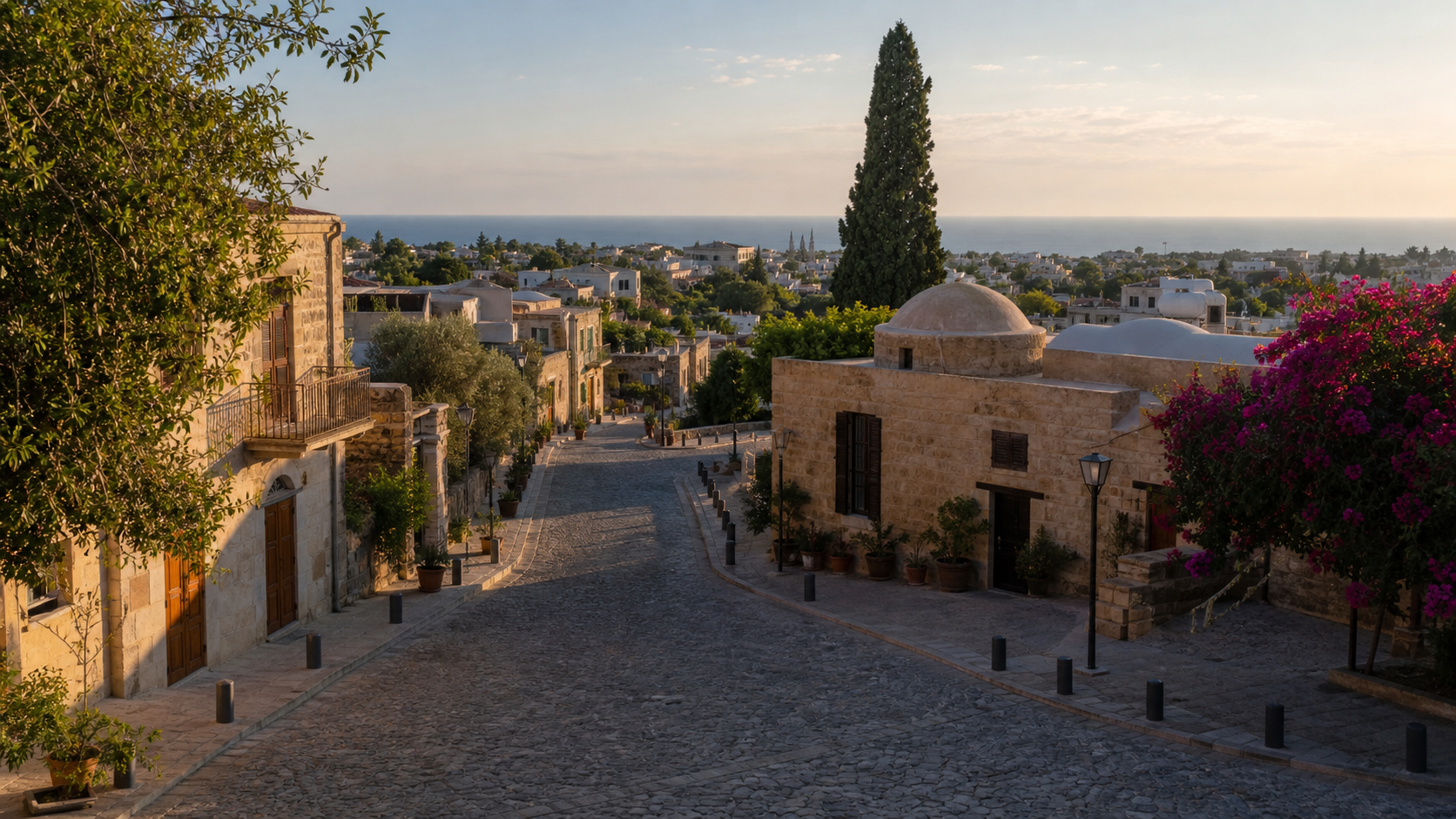
Paphos Old Town is Ktima: the upper town above Kato Paphos harbour, and it is best treated as a slow half-day rather than a second set of ancient ruins. Come for the municipal market, early-20th-century streets, small museums, crafts and a meal away from the waterfront. If your Paphos plan currently consists of the harbour and the Archaeological Park, Ktima is the useful counterweight.
The name causes unnecessary confusion. “Old Town”, “Ktima”, “Pano Paphos” and “Upper Paphos” are commonly used for the hilltop town centre. It is not Old Paphos/Palaipaphos at Kouklia, the separate archaeological area outside town. And it is not Kato Paphos, the lower harbour district where most visitors stay.
The distinction matters because the two areas reward different plans. Kato Paphos is where to allow time for the mosaics, harbour and coastal walk. Ktima is where to put an unhurried morning or late afternoon, with enough slack to browse a street or have lunch instead of racing between pins. For the wider choice of beach, archaeology and day trips, start with our Paphos guide.
What Paphos Old Town is actually like
Ktima is the modern town’s administrative and commercial centre, uphill from the resort-facing coast. The Pafos Regional Board of Tourism’s Old Town guide highlights the municipal fruit market, Town Hall and Public Library architecture, museums, religious buildings, crafts, cafés and regular city-bus links. That is a better description of the experience than calling it an “attraction”.
Expect a mix, not a preserved museum quarter: pedestrian streets, older façades, practical shops and some restored cultural spaces. The main reason to come is that the pace and purpose are different from the harbour. A traveller looking for a Roman-site blockbuster may prefer to stay below; someone wanting a more rounded sense of Paphos should make the climb.
| If you want… | Build your Old Town visit around… | Do not assume… |
|---|---|---|
| Local produce and browsing | The municipal market and surrounding streets | Every stall will keep tourist hours |
| Architecture and a gentle walk | The squares, Town Hall area and Makariou Avenue | A neat, single historic route with ticketed stops |
| Culture indoors | One museum or craft space | That every venue has the same opening days |
| Lunch away from the harbour | A reservation or a flexible local search on the day | The first open door will match your timing |
The best way to spend a half-day
Start with the Municipal Market and give the surrounding lanes time rather than treating the hall as a quick photo stop. Visit Pafos describes local growers bringing seasonal produce early, alongside other market goods; that is why morning is the sensible first attempt. It is also why there is no useful universal “market opening time” to print here—check live information if a particular purchase matters to your day.
From there, walk through the centre at an easy pace. The regional tourism board specifically calls out the Town Hall, Public Library and the neoclassical streets around them. This is a good place to look up as well as ahead: a façade, a shaded lane and the changing view towards the coast are the point. It does not need a tightly scripted walking tour to work.
If you want one structured stop, choose the Archaeological Museum of the Pafos District or the Pafos Ethnographical Museum, rather than trying to force both into a short visit. The archaeological museum’s collection follows the district from prehistory to the Roman period; the ethnographical museum focuses on rural life, crafts and domestic objects. Both are listed by Visit Pafos, which also warns that hours and admission can change. Use the museum’s current information before travelling, particularly on a Sunday or public holiday.
Old Town also makes sense for a small cultural detour rather than a major museum commitment. Visit Pafos notes craft activity and cultural venues in the area, including The Place – Home of Arts, Cypriot Crafts and Traditions. Treat it as an optional stop: check whether the space, workshop or exhibition you want is actually running rather than arriving with a generic “open daily” assumption.
Finally, leave time for a coffee or lunch. This is where the page should remain deliberately non-prescriptive: individual restaurants change owners, hours and standards too quickly for a static shortlist. Use our Paphos restaurants guide to narrow the food question, then confirm the current service day directly with the place you choose.
A simple route that does not overfill the day
| Time | Plan | Why it works |
|---|---|---|
| Morning | Market, then a loop through the nearby pedestrian streets | The market is most likely to feel like a working market earlier in the day |
| Late morning | Pick one museum or cultural stop | You get context without turning the visit into indoor admin |
| Lunch | Stay in Ktima or return to the harbour deliberately | It avoids a rushed, hungry downhill decision |
| Afternoon option | Archaeological Park, harbour walk or beach | These are Kato Paphos experiences, not things to squeeze into the Old Town loop |
This is especially useful on a short break. Keep the old town and the harbour in the same day only if the weather, energy and opening times line up; otherwise, give Ktima its own half-day. If you are arriving without a car, our Paphos Airport to Paphos guide helps you work out whether an airport bus, taxi or hire car best matches where you are staying.
Getting there from the harbour, hotel area or airport
The hill is the practical detail many maps conceal. Walking from Kato Paphos can be pleasant in mild weather, but it is a climb. In summer heat, a taxi or bus can preserve the energy you actually want for walking around once you arrive.
The Pafos tourism board says regular city buses connect Old Town with Karavella Station. Use the live Pafos public-transport information to choose a route and confirm the stop for your accommodation; routes and timetables are live operating details, not durable blog facts. A taxi is the low-friction choice if you are travelling with children, shopping bags or anyone who would rather not do the uphill section.
If you have hired a car, pick your parking plan before leaving the coast and do not assume an old town street will produce an empty space. The same basic hire-car checks still apply: use our Cyprus car-hire guide for the booking and agreement side, and our driving in Cyprus guide before treating a map shortcut as a good route.
How it fits a Paphos holiday
Old Town is most useful when it balances something else. Pair it with the harbour and Archaeological Park for a city day; pair it with a relaxed beach morning when you want a change of scene; or use it as the urban half of a longer stay that also includes Paphos beaches, the Blue Lagoon or a well-planned Kourion visit. The one pairing that needs care is the Tombs of the Kings, which is a separate ticket from the Archaeological Park and belongs in the shadeless first hour of the morning rather than the afternoon.
It is not a reason to skip the famous waterfront sights. It is the missing layer that makes the rest of Paphos make more sense: upper town and lower town, market and harbour, everyday streets and archaeology. Go with a flexible half-day, check live opening information for any non-negotiable stop, and let the rest of the visit stay unforced.
Sources for current local details: Visit Pafos: Old Town Pafos, Visit Pafos: Museums, Visit Cyprus: Pafos city and Pafos public transport. Market, museum, transport and restaurant opening details can change; check directly before travel.
Quick answers
Frequently asked questions
Is Paphos Old Town worth visiting?
Yes, if you want a half-day that feels different from the harbour. Ktima is the upper, working town: its market, public buildings, museums, shops and cafés make a useful contrast to Kato Paphos's waterfront archaeology. It is not a second archaeological park, so go for the streets and local-town texture rather than a long list of monuments.
What is Paphos Old Town called?
It is usually called Ktima, Pano Paphos or Upper Paphos. In this guide, 'Paphos Old Town' means that upper-town area above Kato Paphos harbour. It is not Old Paphos at Kouklia, the separate ancient sanctuary site outside the modern town.
How do I get from Paphos Harbour to Old Town?
A taxi is the simplest option if the hill or heat would spoil the walk. For public transport, check the live Pafos bus journey planner for the day; the regional tourism board confirms that regular city buses connect Old Town and Karavella Station. Walking is possible, but treat it as an uphill journey and use it only in comfortable weather.
What time does Paphos Old Town market open?
Do not plan around a time quoted in an old travel article. Visit Pafos says local producers arrive early, but individual market and shop hours can vary. Go in the morning for the best chance of a working-market feel, then confirm any specific stall, museum or restaurant directly before setting out.
Is Paphos Old Town the same as Kato Paphos?
No. Kato Paphos is the lower harbour-side area, home to the Archaeological Park and the seafront. Old Town/Ktima is uphill, around the municipal market, public buildings and older commercial streets. They make a good paired day, but they are two different parts of the city.