Places · The fenced resort of 1974
Varosha: visiting the Famagusta ghost town from the south
Can you visit Varosha, the Famagusta ghost town? What is open, entry rules and reported hours, how to get there from Protaras, Ayia Napa and Larnaca, and the history behind the fence.
- Filed under
- Places
- Updated
- 4 October 2026
- By
- The editors
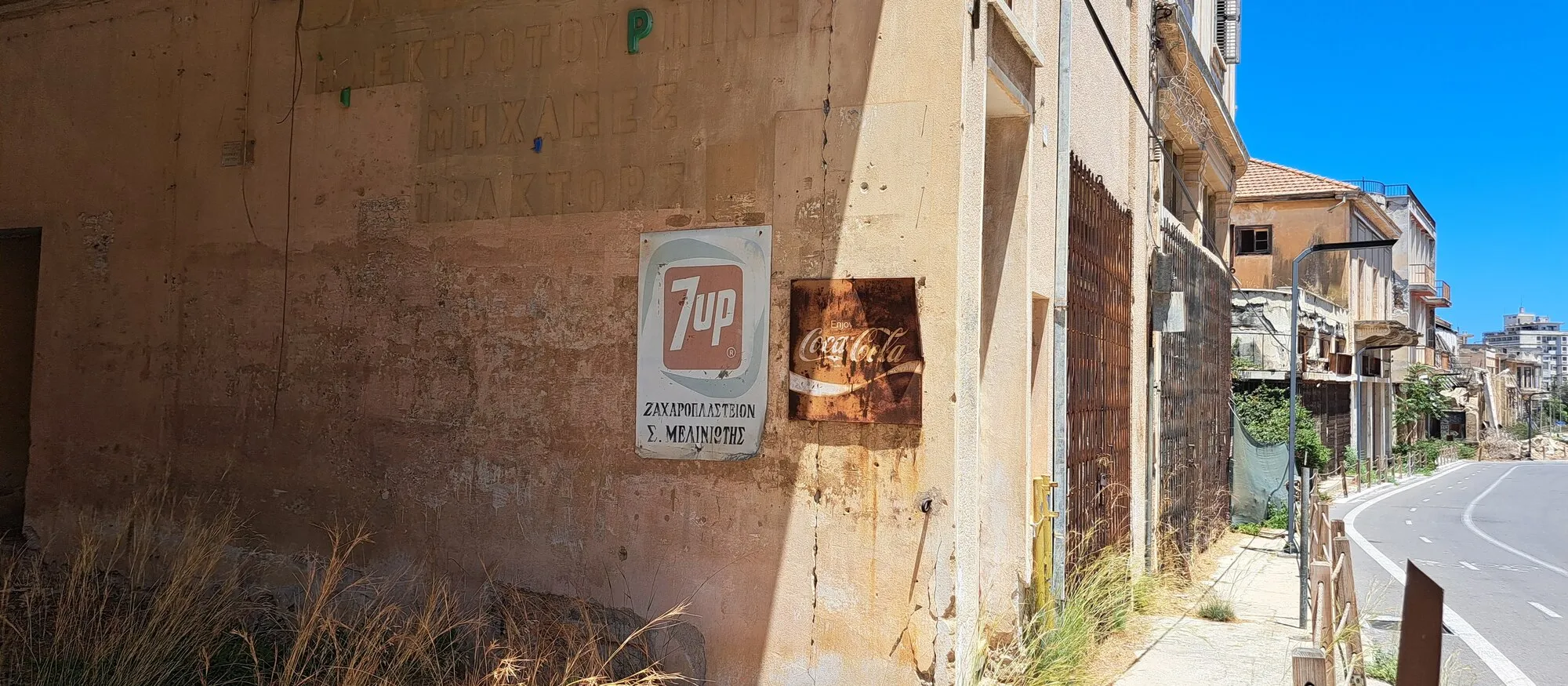
Yes, you can visit the Famagusta ghost town, but only a part of it. Since October 2020 a section of Varosha, the resort quarter abandoned in 1974, has been open to civilians along marked routes that you walk, cycle or ride by e-scooter. Most of the district is still a fenced military zone. Entry has been free, and from Protaras or Ayia Napa the entrance is under half an hour’s drive through the Deryneia crossing.
It is not a theme park, and it helps to know that before you go. Varosha lies in the north of Cyprus, under Turkish Cypriot administration, and the people who owned its houses, shops and hotels are still alive and living a few kilometres away in the Republic. The UN and the Republic of Cyprus regard the 2020 opening as a breach of Security Council resolutions. You can visit lawfully from a holiday in the south, but it is a visit to an unresolved dispute, not just a photogenic ruin.
Varosha at a glance
| Where | Southern edge of Famagusta (Gazimağusa), north of the Green Line |
| What is open | Marked streets and part of the beachfront; buildings and the wider fenced zone are off limits |
| Entry fee | Free, according to recent reports |
| Getting around inside | On foot, hired bicycle or e-scooter, or staff-driven buggy; no private cars |
| Nearest crossing from the south | Deryneia (vehicles and pedestrians) |
| Documents | Passport or EU ID card at the crossing |
| Currency inside | Turkish lira; cards widely used for hire |
| Time to allow | 1.5 to 3 hours inside, plus the crossing |
What happened to Varosha
In the early 1970s Famagusta was the island’s leading resort, and Varosha was its modern face: a strip of high-rise hotels along John F. Kennedy Avenue and the Glossa beach, with shops, bars and car showrooms on Leonidas Street behind. At its peak it had about 39,000 residents. Elizabeth Taylor stayed at the Argo Hotel, at the southern end of the avenue looking towards Protaras.
In August 1974, during the Turkish invasion, the Greek Cypriot population fled south to Paralimni, Deryneia and Larnaca, expecting to return within days. The Turkish army fenced the quarter instead, and it has been closed ever since. In 1984 UN Security Council Resolution 550 called any attempt to settle Varosha by people other than its inhabitants “inadmissible” and asked for the area to be handed to UN administration. That never happened. The 2004 Annan Plan would have returned Varosha to its owners, but Greek Cypriots rejected the wider plan in a referendum.
With no one living there, the buildings were looted and slowly reclaimed by plants, and the BBC reported sea turtles nesting on its beaches in 2014.
Why it reopened, and why that is contested
On 8 October 2020 the Turkish Cypriot administration opened a stretch of Varosha to the public, ahead of an election in the north. A second phase followed in July 2021. On 23 July 2021 the UN Security Council issued a presidential statement calling for the reversal of every step taken on Varosha since October 2020, and the EU and the Republic of Cyprus condemned the move. In May 2022 part of the Golden Sands beach reopened for commercial use with sunbeds and umbrellas.
Property is still being fought over in the courts. In June 2025 the European Court of Human Rights ordered Turkey to pay compensation to a Cypriot company over flats it could not access in Varosha, one of a long line of such rulings. Turkish Cypriot leaders said in October 2024 that 2.2 million people had visited since the opening.
Some Greek Cypriots choose not to visit, because they feel it lends legitimacy to the arrangement. Others go to see the streets they or their parents left. Whichever view you take, treat it as you would a memorial: stay on the routes, keep your voice down and leave the drone at home.
What you can see inside
The open area is a grid of streets that have been resurfaced, with marked cycle lanes, wooden barriers and signs keeping visitors to the road. Either side are the shells of the 1970s town: shuttered shopfronts with Greek lettering, faded drinks signs (the scene in our photo above), the old Toyota showroom, cafés, banks, villas and the concrete hotels along the old seafront. Fences mark where the closed military zone begins, and they are guarded.
The rules reported by recent visitors are consistent:
- stay on the marked routes, and keep bicycles and scooters in the cycle lanes;
- do not enter buildings or cross fences, as many structures are unsafe;
- no drones;
- photograph from the routes only, and never point a camera at soldiers or military posts.
The last point is backed by the UK Foreign Office, which warns that photographing military buildings anywhere in Cyprus can lead to arrest.
Opening hours and costs
There is no official English-language page for the Varosha visitor site, so treat these as reported rather than guaranteed. Visitor guides updated for 2026 give seasonal hours of 08:00 to 19:30 from April to August, 08:00 to 18:00 in September and October, and 08:00 to 17:00 from November to March. That makes October 2026 an 18:00 close, and from 1 November the gate shuts at 17:00, and sunset in Famagusta falls at about 16:50 by then, so the last hour of light and the last hour of opening coincide.
Entry is free. Bicycles, e-scooters and buggies at the entrance cost a modest amount in Turkish lira, and because the lira moves quickly we have not quoted a price. Take a card and a little cash; our guide to money in Cyprus explains why the north runs on a different currency from the rest of the island.
Getting there from the south
The usual route from a holiday in the Republic is the Deryneia crossing, which the Cyprus Ministry of Finance lists as open to both vehicles and pedestrians. Read our Green Line crossing guide before you set off: it covers documents, goods limits and what changes on the other side.
These driving times come from the OSRM routing engine on the public road network, ending at the Palm Beach Hotel near the visitor entrance. They do not include time at the checkpoint.
| Starting point | Distance | Drive time (no queue) |
|---|---|---|
| Famagusta Cultural Centre, Deryneia | 8.3 km | 12 min |
| Ayia Napa (monastery) | 18.4 km | 26 min |
| Protaras (Fig Tree Bay) | 20.9 km | 29 min |
| Larnaca Airport | 56.4 km | 62 min |
| Paphos harbour | 179.6 km | 2 hr 41 min |
From the east coast it is an easy half-day. Our Protaras and Ayia Napa guides list it among the day trips, and it pairs well with a morning on the Protaras beaches. From Paphos it is a long day, so if Varosha matters to you, our Paphos or Protaras comparison may change where you base yourself.
By hire car. The UK Foreign Office says cars hired in the Republic often have no insurance cover in the north, and you will not be let through a crossing without the right documents. Insurance for the north can be bought at some crossings, but that does not mean your rental company permits the trip. Check the contract first; our car hire guide explains what to look for.
On a tour. Small-group tours run from Ayia Napa and Protaras and handle the crossing and transport for you, which removes the insurance question entirely.
Your phone. Once you are over the line, your handset may join a Turkish network, where EU roaming rules no longer apply. Our phone guide explains how to avoid a surprise bill.
See it from the south first
Before crossing, stop at the Cultural Centre of Occupied Famagusta in Deryneia, built next to the roadblock that has divided the town since 1974. It has a viewing platform with free binoculars trained on Varosha’s skyline, plus exhibits on the town as it was. Entry is free; the hours published online disagree, so phone ahead on +357 23 740 860. Seeing the fence from the side its former residents live on, then walking its streets from the other, gives the visit context that a tour alone will not.
Is it worth visiting?
For most visitors staying on the east coast, yes. Few places on the island show the cost of its division so plainly, and it is close enough to fit into a morning. It is less suited to young children who will want to explore buildings they cannot enter, and in July and August the open streets have little shade, so go at opening time with water and a hat.
If you are still deciding how far to go into the north on this trip, our north or south Cyprus guide sets out the bigger trade-offs, and Cape Greco is a calmer counterpoint for the afternoon back in the south.
Sources for changing details: History and dates from Wikipedia’s Varosha article and the cited UN Security Council texts; 2025 court ruling and April 2026 admission from the Cyprus Mail; crossing points from the Cyprus Ministry of Finance; hire-car and photography advice from the UK Foreign Office, last updated 14 August 2026; seasonal hours from visitor guides updated in 2026. Checked 4 October 2026. Confirm hours locally before you travel.
Hero photo: shop wall on a reopened street in Varosha, July 2025, by Mihai DZ, via Wikimedia Commons, released under CC0. Cropped.

Quick answers
Frequently asked questions
Can you visit the Famagusta ghost town?
Yes, part of it. Since October 2020 the Turkish Cypriot authorities have let civilians into a section of Varosha along marked routes, on foot, by bicycle or by e-scooter. Most of the district is still a fenced military zone that nobody may enter. From the south you need to cross the Green Line first, usually at Deryneia, with your passport or EU ID card.
Is Varosha free to enter?
Entry to the open part of Varosha has been free according to recent visitor reports, and the Cyprus Mail described admission as free in April 2026. Bicycles, e-scooters and staff-driven buggies at the entrance carry a small charge in Turkish lira, and visitor guides say cards are usually accepted.
Why was Varosha abandoned?
Varosha was the modern resort quarter of Famagusta, home to about 39,000 people at its peak. Its Greek Cypriot residents fled in August 1974 during the Turkish invasion, and the Turkish army fenced the area off. A 1984 UN Security Council resolution said only its original inhabitants should resettle it, so it stayed empty for 46 years.
Can you drive into Varosha?
No. Private cars are not allowed inside the visitor zone, so you park outside the entrance and walk or hire a bicycle or scooter. If you drive a hire car from the Republic of Cyprus, check that the rental company allows the crossing and arrange insurance for the north, which the UK Foreign Office says hire cars often lack.
How long do you need in Varosha?
Most visitors spend between one and a half and three hours inside the open area. On foot the main streets and the beachfront take a couple of hours; a bicycle or e-scooter cuts that down. Add time for the checkpoint queue in each direction, which varies with the day and season.